Most homeowners in Orange County do not give their subfloors much thought until there is a creak or dip underfoot. But the layer beneath your flooring plays a bigger role than most people realize. That middle layer, between your visible floor and the foundation, can quietly shift, settle, or hold moisture for years without making itself known.
As spring winds down and the weather starts warming up, this is when those hidden problems often start to show. Moisture trapped during the wetter months can affect the structure underneath, and temperature shifts may cause movement. Subfloor inspection services provide a chance to spot these changes early, before they lead to warped boards, tiles that sound hollow, or adhesive failures.
What Subfloors Do and Why They Matter in Southern California Homes
The subfloor gives your flooring something to rest on and stay stable. It connects your finished floor to the structure underneath, helping it hold up to everyday foot traffic, furniture, and seasonal changes.
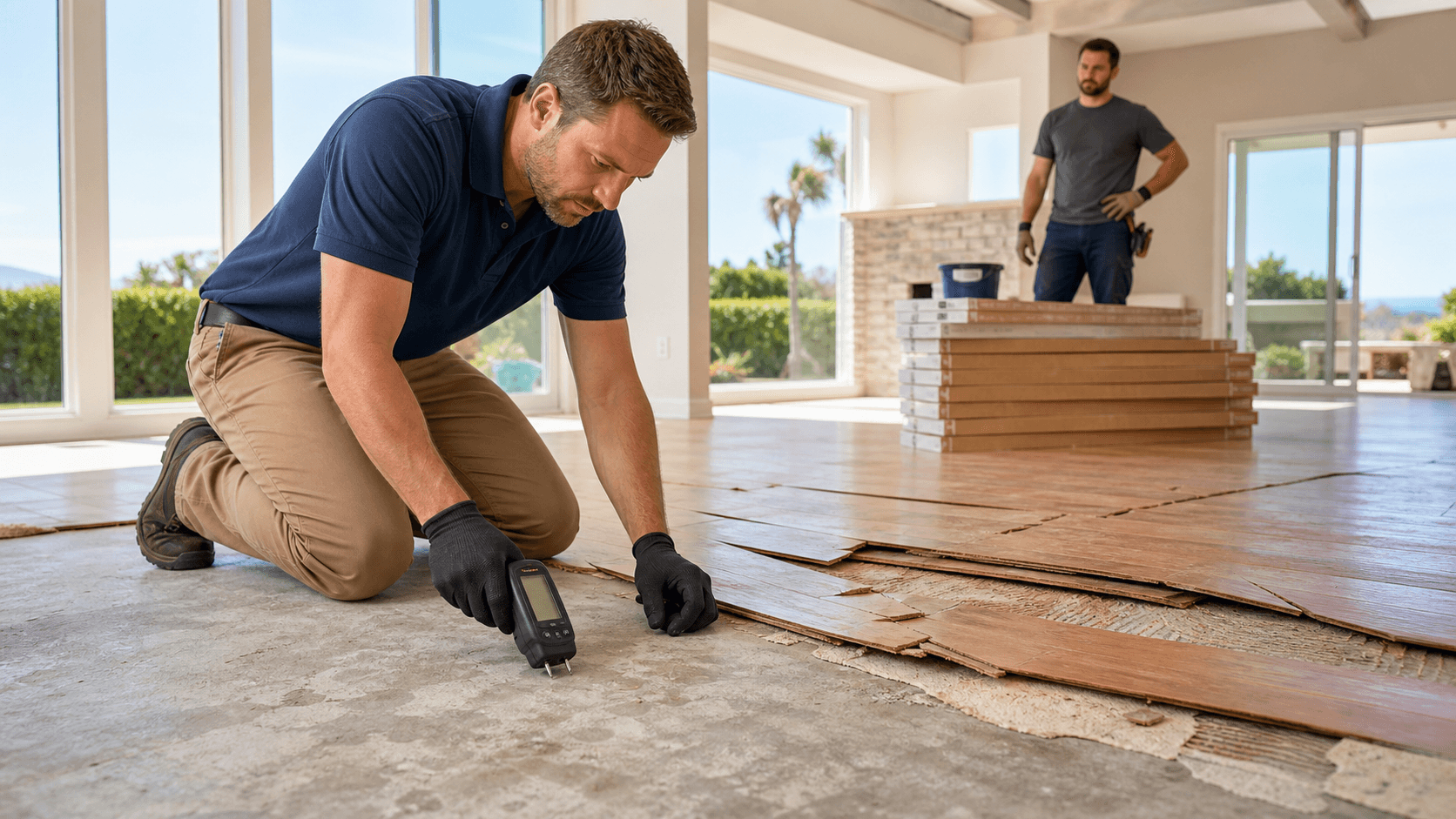
- In homes built on slab-on-grade foundations, like many in Orange County, the subfloor may be a concrete base with no crawl space underneath. Here, moisture from within the slab can affect adhesives or make floors feel damp or cold.
- Raised foundation homes often include plywood or OSB panels set over joists. These allow more airflow but can be affected by shifting support or moisture from underneath.
- The materials matter. Concrete absorbs and releases moisture slowly, while wood-based subfloors respond more quickly to humidity changes. Both can expand, shrink, or move if the conditions are not stable.
- At OC Flooring Inspection, our certified inspectors use moisture meters, in-crawlspace checks, and thorough visual exams to provide Orange County homeowners with reliable subfloor inspections and well-documented reports.
These differences affect how inspections are approached. Knowing how a home is built helps determine where to look for weak spots or where movement might be coming from.
Signs That It's Time to Check Your Subfloor
You do not always need to see damage on the surface to know something might be wrong underneath. When flooring starts to feel off, that is often a sign the subfloor is struggling.
- Uneven spots or dips, especially in areas that used to feel flat
- Gaps between planks or tiles that used to line up
- Hollow sounds or soft patches in hardwood or laminate
Some of these changes can happen slowly. Moisture that got in during earlier months might settle beneath the flooring and stay there, especially if the room does not get much sun or airflow. The structure beneath can shift after years of use, especially in hallways, kitchens, or areas with heavy furniture.
Even when the visible floor looks fine, subfloor problems can gradually affect its performance. If the surface feels different or starts reacting oddly to temperature or humidity, that is usually a sign to check what is going on below.
What Happens During a Subfloor Inspection
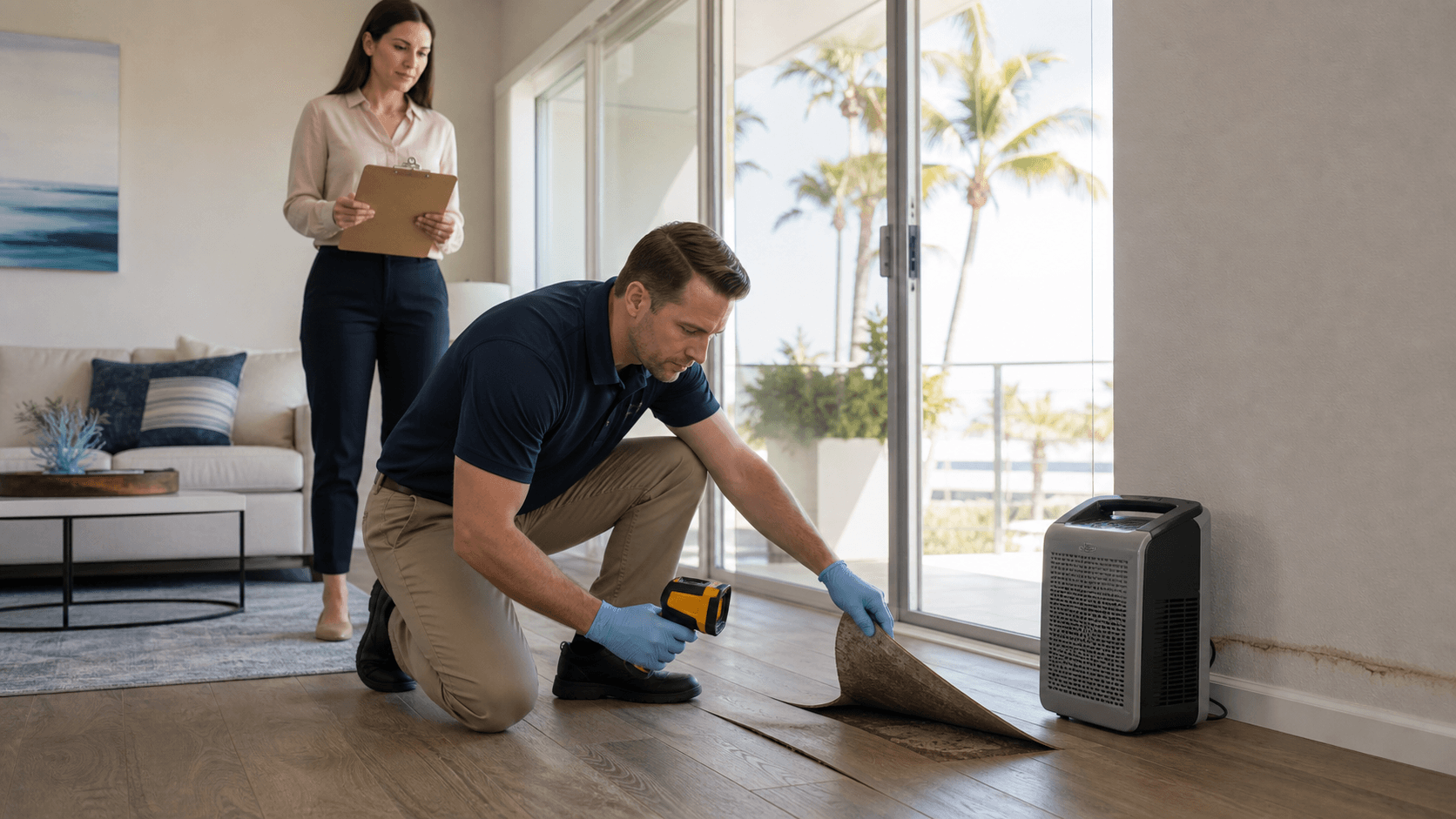
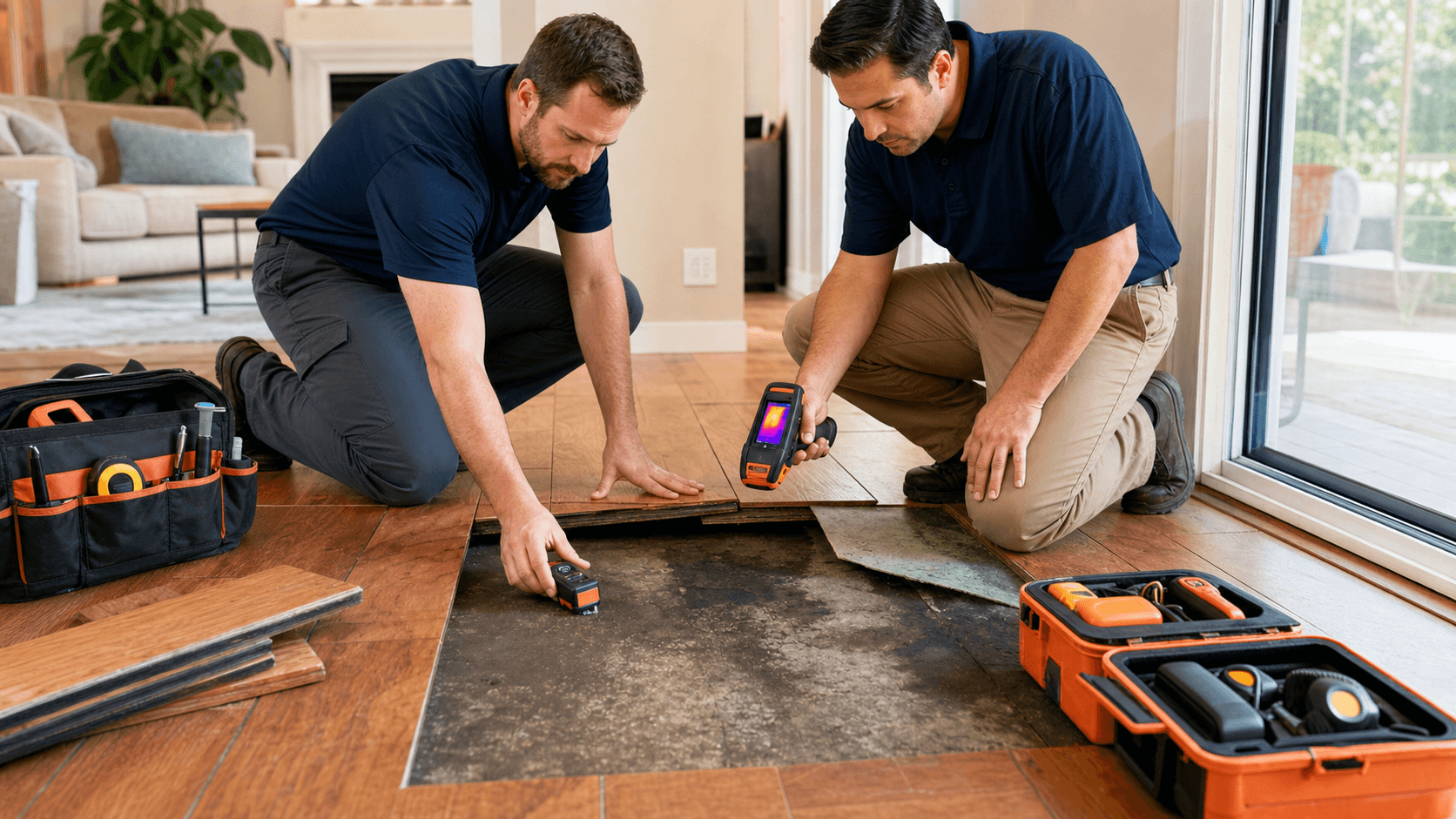
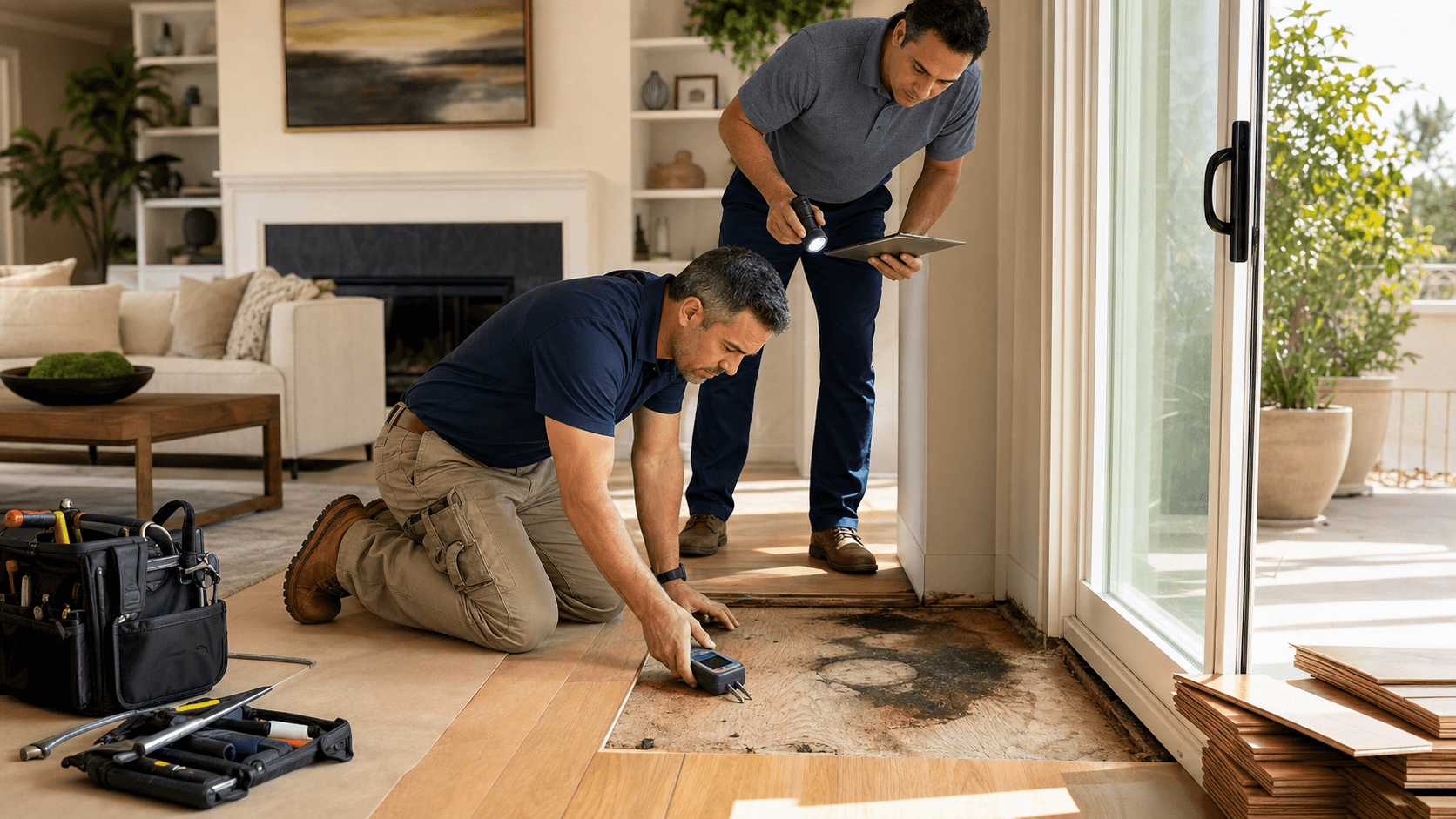
Subfloor inspections provide the opportunity to check areas that are not visible during normal flooring care. Specific tools and techniques are used to measure what the eye cannot see.
- Moisture meters are used to test for water that may be trapped in the concrete or wood layers.
- Inspection includes signs of movement, such as uneven levels or shifting support underneath the flooring.
- Gaps, cracking, or small signs of wear are checked that suggest the subfloor is moving or starting to break down.
- In raised-floor homes, it is sometimes necessary to access the crawl space to see if there is sagging, mildew, or pest damage that could affect the base layer.
- Results from our subfloor inspections help guide warranty claims, repair recommendations, or upgrade planning for Orange County homeowners.
Results from this inspection make future choices easier. They show where repairs might be needed or whether a replacement should be delayed until conditions improve. Sometimes the problem is not in the top layer at all, which can save time and money during a remodel.
When Subfloor Issues Lead to Bigger Problems
What starts as a small soft spot can turn into a more serious situation over time. Subfloor damage not only makes floors feel uneven, it can slowly affect how long they last.
- Failed adhesives from damp concrete can cause planks or tiles to lift, shift, or separate
- Subfloor separations may lead to cracked grout lines or squeaks that do not go away with surface touch-ups
- Worn spots might not hold a new floor properly, especially if action is not taken to improve the base first
Cases have occurred where flooring upgrades were started without checking the subfloor condition first. That often means the new materials do not last, or they shift in ways the warranty does not cover. In other situations, the surface was removed only to realize the real issue was a damaged subfloor, not the flooring product itself.
Regular subfloor inspections help spot the source of these issues before they spread. They help avoid unnecessary demo or repeated installations by pointing out where the real problem starts.
Post-Winter Concerns as Summer Approaches
Late spring in Orange County tends to be warmer and drier, but it follows months of damp weather, shaded patios, and occasional rain. That mix creates the right conditions for lingering moisture to settle under floors, especially in older homes.
- Rainwater from early spring may have leaked in near doors or windows and soaked into the base layer without showing on the surface
- Slab-based flooring in shaded rooms stays cooler, making it harder for moisture to evaporate
- Raised foundations may trap humidity in crawl spaces, leading to early signs of structure movement
This time of year, the first effects of those colder-weather conditions are often noticed. Flooring may start wearing unevenly, or repeated foot traffic may highlight dips or soft patches that did not feel as obvious earlier in the year. Late spring is a good time to check for those quiet signals before summer dries them out, hides them, or makes them worse with shrinkage.
Stronger Floors Start Underfoot
No matter how nice the surface looks, floors are only as strong as the layer beneath them. A good base helps prevent squeaks, cracks, and surprises that show up months or years later.
Checking subfloor health provides more control. Instead of guessing what is going wrong with your floors or spending on repairs that do not last, identifying whether the issue sits underneath is key. Early subfloor inspections help Orange County homeowners make smarter decisions, especially after winter winds down and before summer heat sets in. Whether planning a remodel or just wanting to stay ahead, meaningful upkeep always starts with what is underfoot.
Uneven, soft, or noisy floors can signal hidden issues beneath the surface, often caused by lingering moisture from past seasons. Our team uses advanced tools and years of expertise to detect problems early, so you can avoid bigger headaches down the road. To learn more about what is happening underneath, see our subfloor inspection services. When something feels off underfoot, trust OC Flooring Inspection to provide honest answers and practical solutions.