Introduction
Summer moves fast in Orange County, and rental turnovers are a big part of that seasonal pace. Many landlords and property managers find themselves deep in prep work between tenants, and flooring is usually near the top of the list. If you're looking for something that stands up to steady use without needing a lot of daily attention, laminate floors are often a solid pick.
Installing laminate flooring in Orange County rentals can bring a good mix of appearance and durability. It makes cleanups easier, and it tends to handle typical tenant traffic pretty well. That said, choosing the right type of laminate, and knowing how it behaves under summer conditions, can make a big difference. Here's what to keep in mind before, during, and after a tenant change this season.
Understanding Laminate Flooring Basics
At first glance, laminate might just look like plastic wood. But it's more than that. Most laminate flooring is made with four main layers. The backing on the bottom helps with stability, followed by a strong core board that makes up most of the material. Then you've got a high-resolution image layer that gives it a wood or stone look. On top sits a tough wear layer that protects the whole thing from foot traffic and small scratches.
Compared to vinyl or engineered hardwood, laminate usually does a better job of mimicking hardwood visuals without needing as much care. It doesn't soak up moisture like natural wood, but it also isn't waterproof. So it's often best used in places where water is controlled. Rentals that don't sit above leaky garages or older concrete slabs give it a fair shot at lasting longer without swelling.
Most of the time, we find laminate works well in rental units with moderate use, places where you're not dealing with heavy rolling loads or regular spills. It finds a good balance between looking good and being easy to replace section by section, if needed.
Summer Wear and Tear in Orange County Rentals
When tenant changeover happens in July or August, things tend to move fast. Boxes get hauled in, furniture is scooted across the room, and air conditioning blasts while windows stand open during clean-outs. All this can create the perfect mix of wear and stress on even a barely-used floor.
Laminate is built to resist dents and scratches, but it isn't immune to rough move-ins. Dragged chairs or dropped objects still leave marks over time, especially if the underlayment isn't absorbing much weight. Another thing we see often is joint separation. If the planks weren't installed tightly, or if they were clicked together over a damp subfloor, summer's dry air indoors can pull them apart.
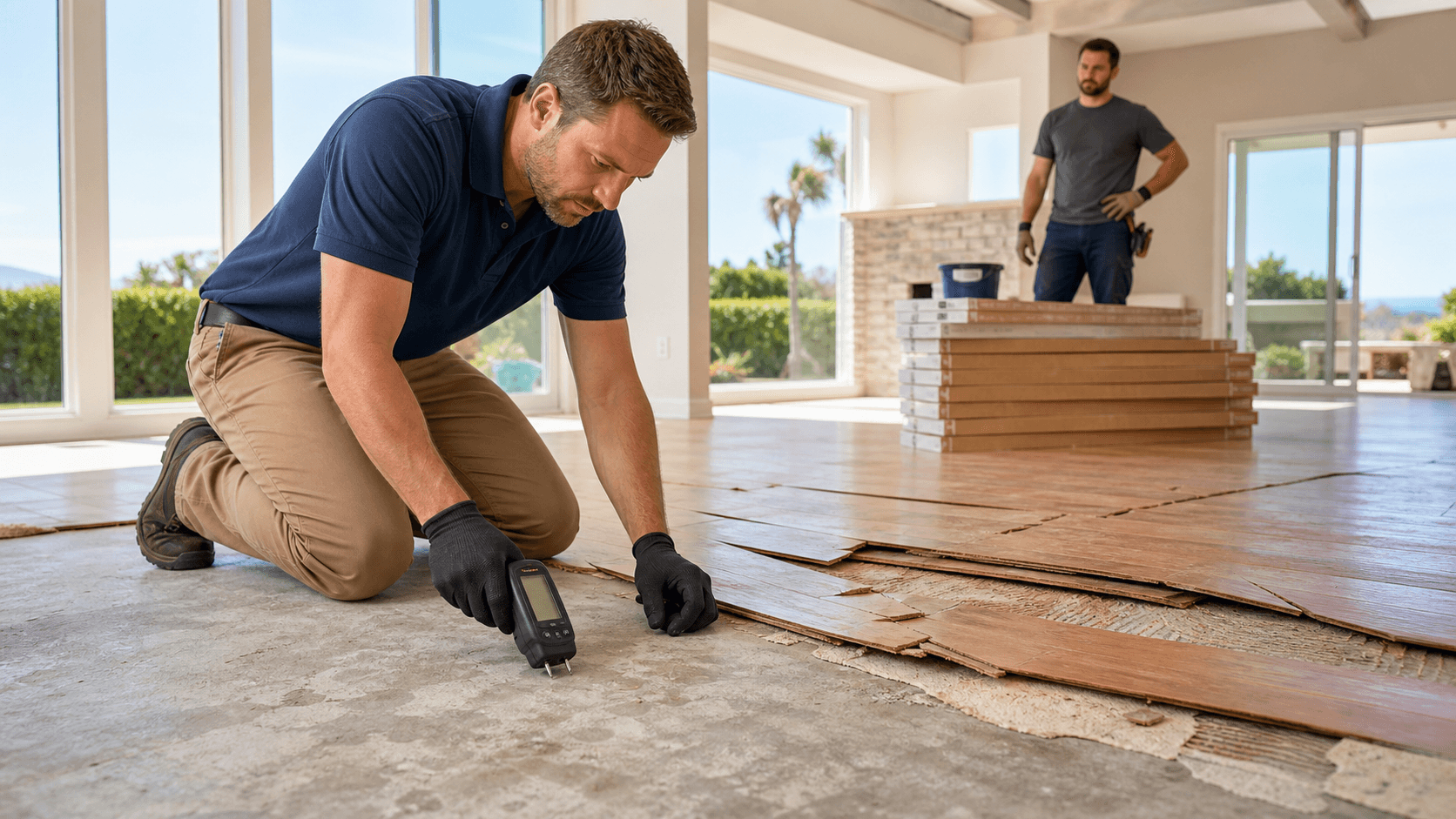
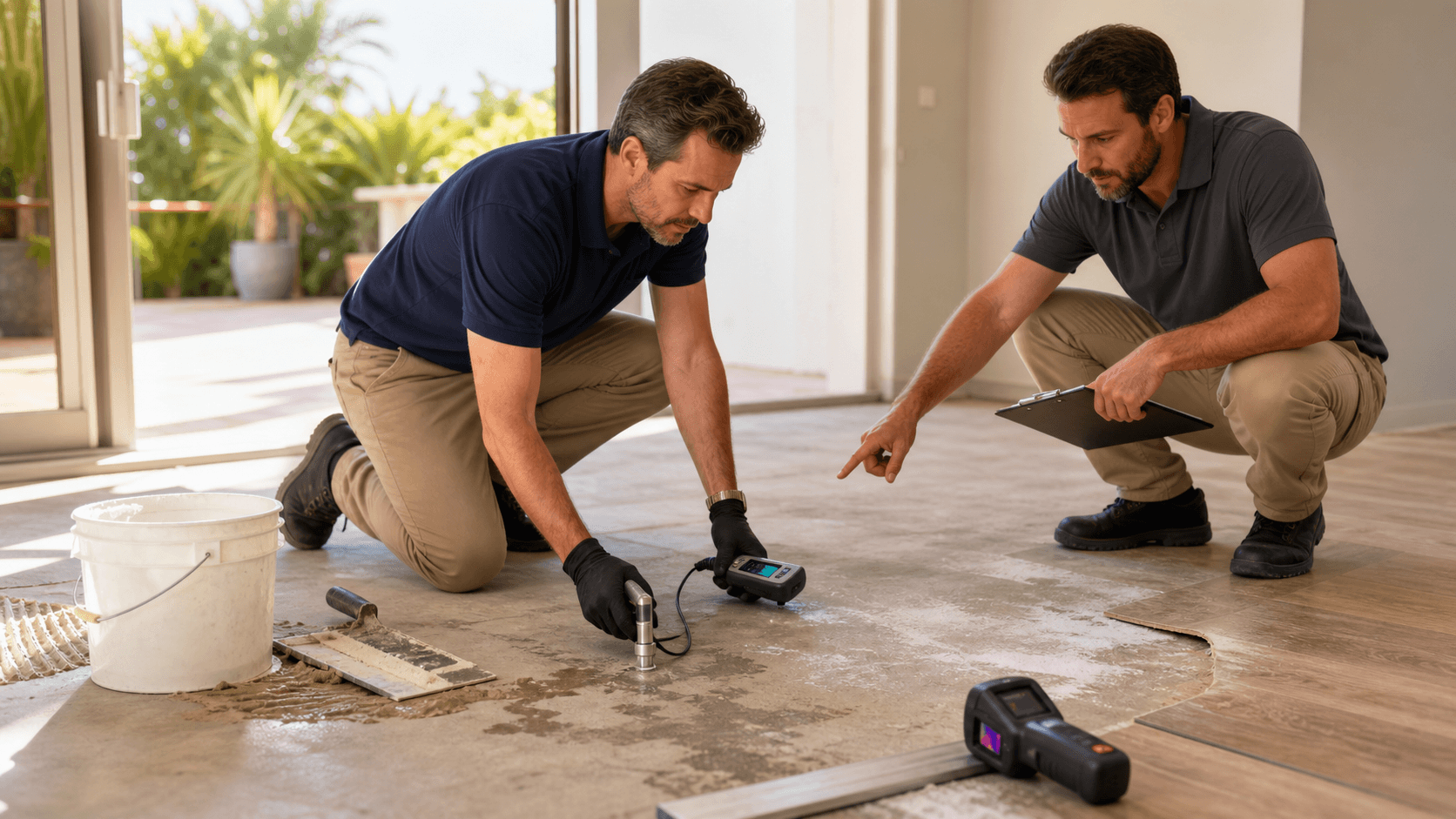
Humidity control is just as important as solid install work. Even though summer air might feel dry in parts of Orange County, coastal properties still deal with shifting conditions throughout the day. Proper prep, like making sure the subfloor is dry and flat before laying planks, holds up much better long-term than rushing into summer installs.
Picking the Right Laminate for Rentals
Picking laminate isn't just about what looks modern. It's about finding a product that works for your space and how it gets used. A few choices matter more than others.
- Thickness: Thicker planks generally last longer and feel more solid underfoot, which tenants tend to appreciate.
- Texture: Smooth laminates look sharp but can show wear faster. Subtle grain-style finishes often do a better job hiding scuffs.
- Finish: A matte finish tends to blend wear more easily than shiny high-gloss, which reflects every mark.
We often hear that cheaper laminates are "good enough," but they tend to peel faster or chip under pressure. Going with ultra-low-end options might work for short-term situations but can end up costing more over time if replacement becomes frequent.
Color plays a role, too. Mid-tone browns and grays tend to look clean, even between tenants. They're neutral enough to match different furniture and dark enough to hide small bits of dirt between cleanings.
Long-Term Considerations for Rental Properties
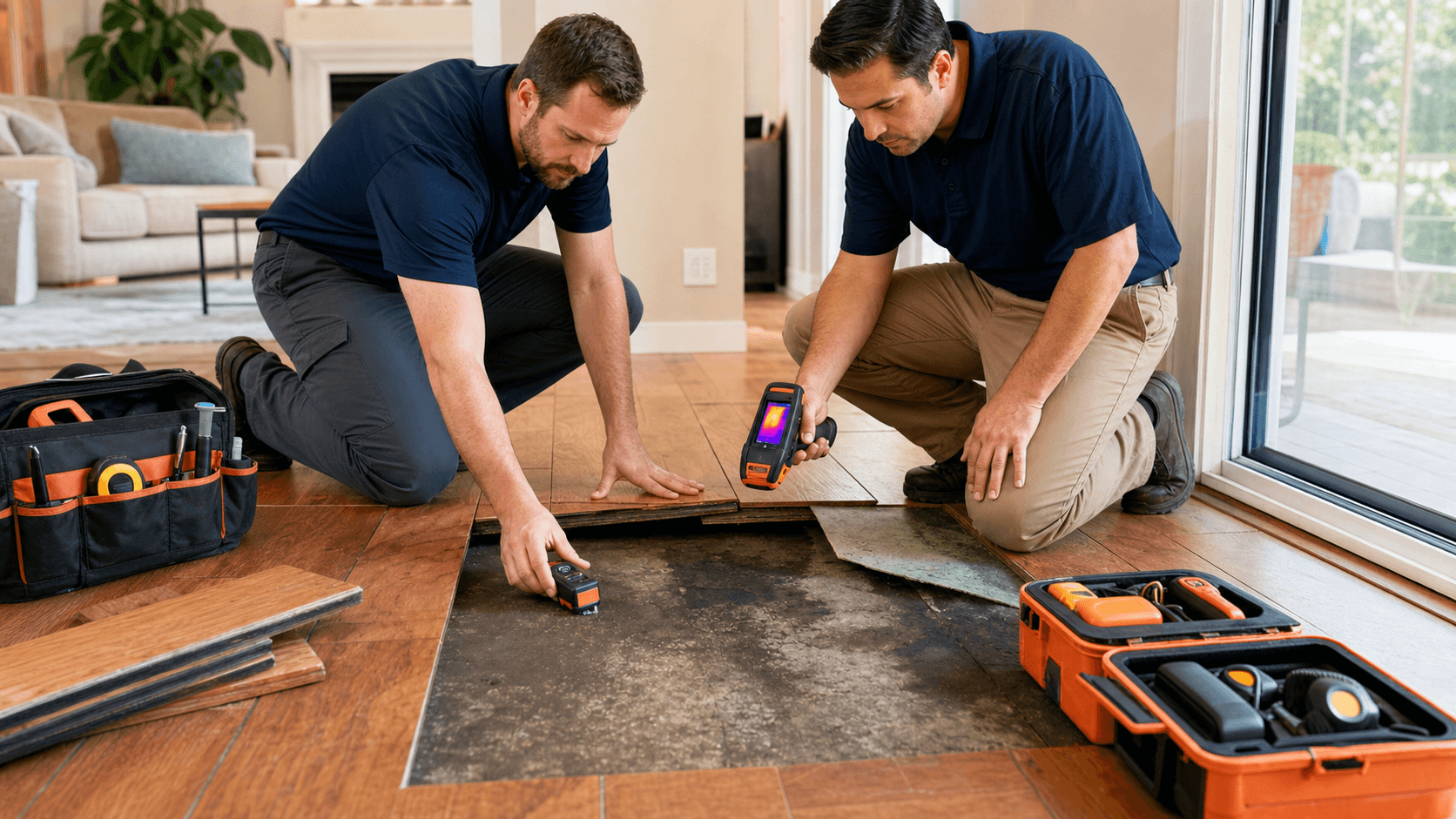
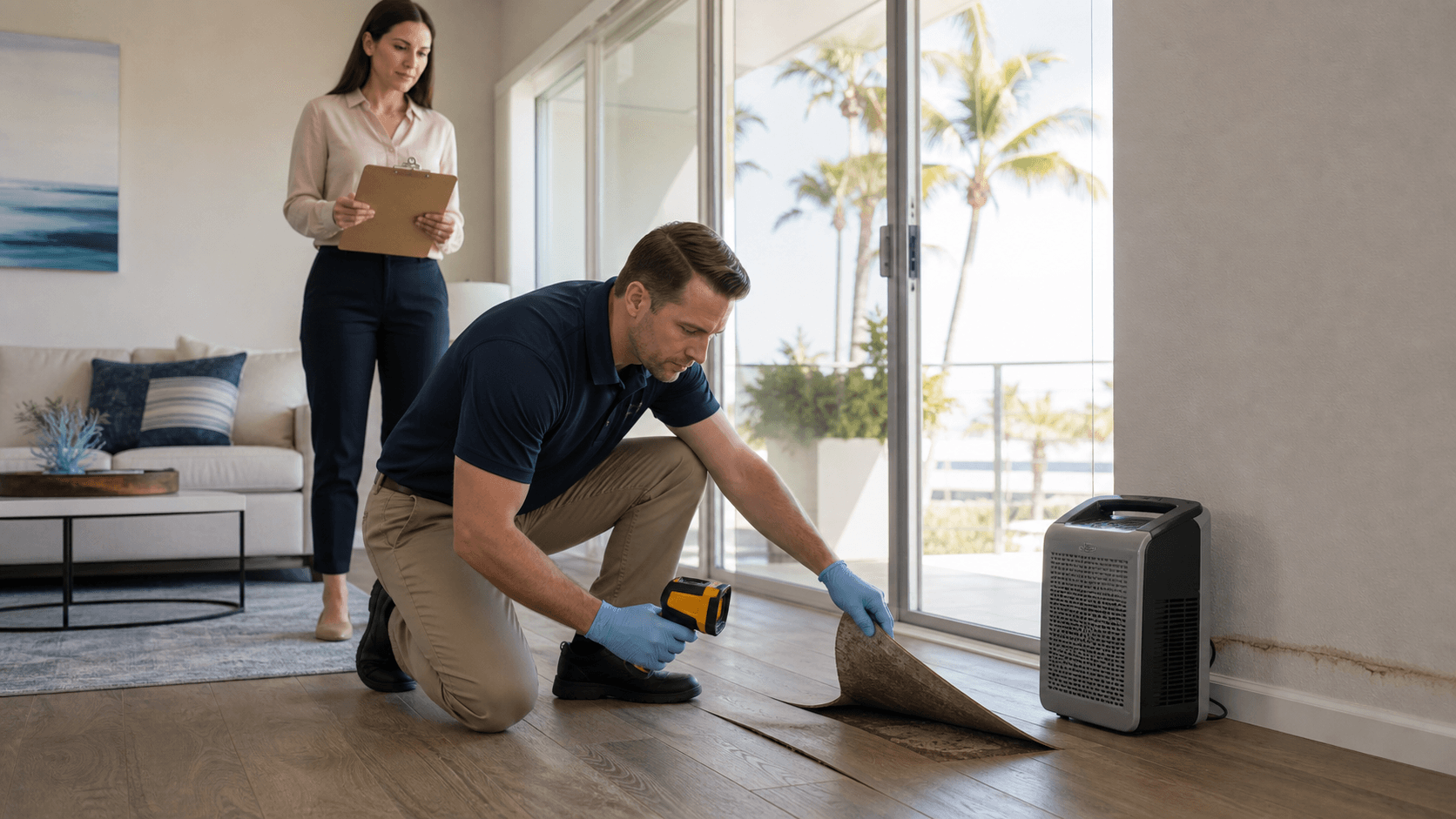
Laminate should last several years under average conditions. But the moment moisture gets underneath, trouble usually follows. Entryways, kitchens, and patios are the usual suspects. If a balcony door leaks water in during a storm, or if kitchen spills seep under boards, swelling can start quietly.
Here's what we suggest paying attention to:
- Look for soft or spongy spots near doors, windows, or around sinks
- Keep an eye out for widening gaps between boards during hot months
- Marks or ripples in the surface can mean underlayers are shifting or holding moisture
Laminate doesn't always show immediate damage. That's why it helps to monitor flooring in older units with repeat tenants or during rechecks after lease renewals. When caught early, isolated damage can often be replaced plank by plank. Wait too long and it turns into a bigger issue.
Keeping Your Rentals Looking Good All Season
Summer is when flooring gets tested the most. Tenants are moving in or out, kids are visiting on break, and air conditioning units are running long hours over warm concrete slabs. Keeping laminate in good shape during this time just means sticking to a few light routines.
- Encourage tenants to sweep or dry mop a few times a week
- Avoid steam mops or wet mops that push water into seams
- Place small rugs in front of sinks and entryways where water risk is higher
Even between tenants, it's worth doing a quick visual check. Look for raised edges, planks that look puffed, or a dull appearance in high-use zones. These small changes can point to larger issues you'll want to fix before a new lease begins.
- We provide certified flooring inspection services for rental property owners to identify laminate and subfloor concerns before they become expensive repairs.
- Owners and property managers throughout Orange County can request detailed inspection reports to help with ongoing property maintenance.
You don't need a full floor replacement every summer, but skipping seasonal upkeep can lead to faster breakdown. Spot it early, and you stay in control of your flooring costs.
Set the Right Foundation for a Trouble-Free Rental Season
Laminate flooring in Orange County rental properties can keep you moving through summer turnovers with fewer problems if you know what to watch for. It doesn't ask much, but it does expect a little care on the front end. Choosing the right product, checking for hidden moisture, and preparing each space before new tenants arrive really pays off.
Every property has its own rhythm, and knowing how local conditions interact with your floors sets you up for fewer surprises. By staying ahead of wear and tear, you protect your space, reduce changeover headaches, and keep renters happy without constantly swapping out floors.
At OC Flooring Inspection, we understand how minor summer flooring concerns in rental properties can quickly grow into costly repairs. Preparing your units for new tenants is the perfect time to assess your floors and catch subfloor issues, wear spots, or moisture risks before they become major problems. Getting a clear assessment now can help protect your investment and keep your leases problem-free. For property owners working with laminate flooring in Orange County rentals, reach out to schedule a professional inspection before turnover season begins.