Fall in Orange County often brings a break from the intense summer heat, but that does not mean your floors get to relax. When the outdoor weather begins cooling, the air inside our homes starts to hold more moisture. That is a subtle shift most people do not notice until their floors start to show signs of stress. A little humidity goes a long way in changing how flooring systems respond, especially if there was already hidden moisture beneath the surface.
This is where floor testing in Orange County becomes helpful. Catching issues early in the season before winter storms arrive can prevent bigger headaches down the line. Whether it is minor lifting, slight gaps between planks, or squishy spots that were not there a month ago, testing gives us a clearer story about what is going on underneath.
How Shifting Humidity Impacts Flooring Systems
When fall settles in, the air is not just cooler, it is heavier with moisture, especially closer to the coast. These areas of Orange County often see days where the humidity comes up without any visible rain. Inside homes, that moisture can hang in the air longer than expected.
A change in how heating and cooling systems are used during this season makes those shifts more noticeable. Many households stop running air conditioners, but do not yet kick on their heaters. This pause in climate control lets indoor humidity swing more than usual. Floors that were stable during the dry summer months might swell, separate, or settle unevenly as a result.
Some symptoms we see this time of year include:
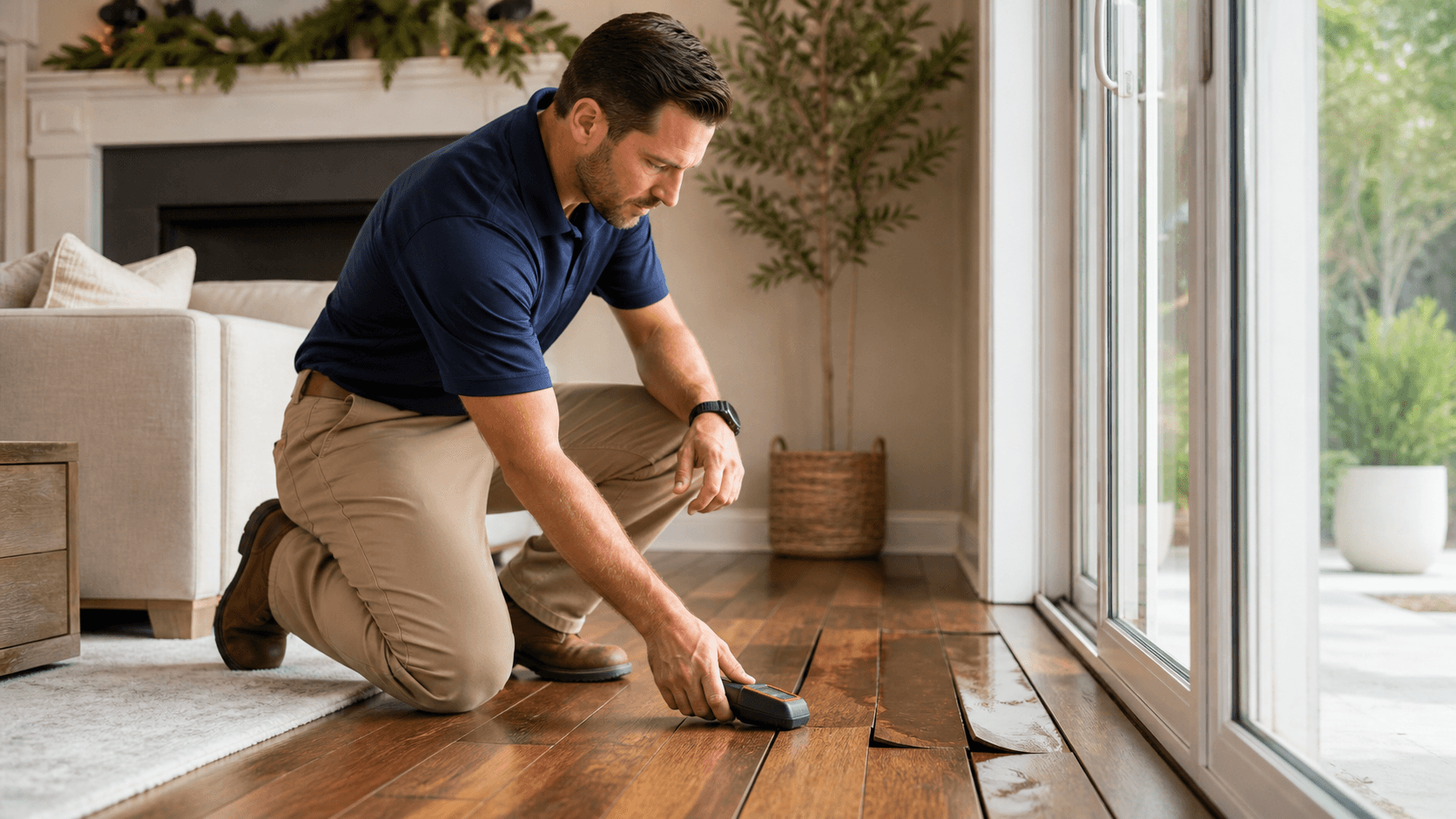
- Wood planks with expanding seams that were not there in August
- Vinyl lifting at the corners
- Subtle cracking sounds when walking across tiles
- Baseboards separating slightly from the floor
These changes do not always point to something major yet, but taken together, they suggest the floor is reacting to environmental pressure.
Moisture Buildup from Past Summer Conditions
The record heat of a Southern California summer can dry out the visible layers of a floor. But that same heat often locks moisture deeper into the concrete where it stays sealed in, especially if proper drying time was cut short during construction. When cooler, humid fall air makes its way back in, those trapped pockets start to shift again.
In many homes, we see signs of reactivated moisture from summer:
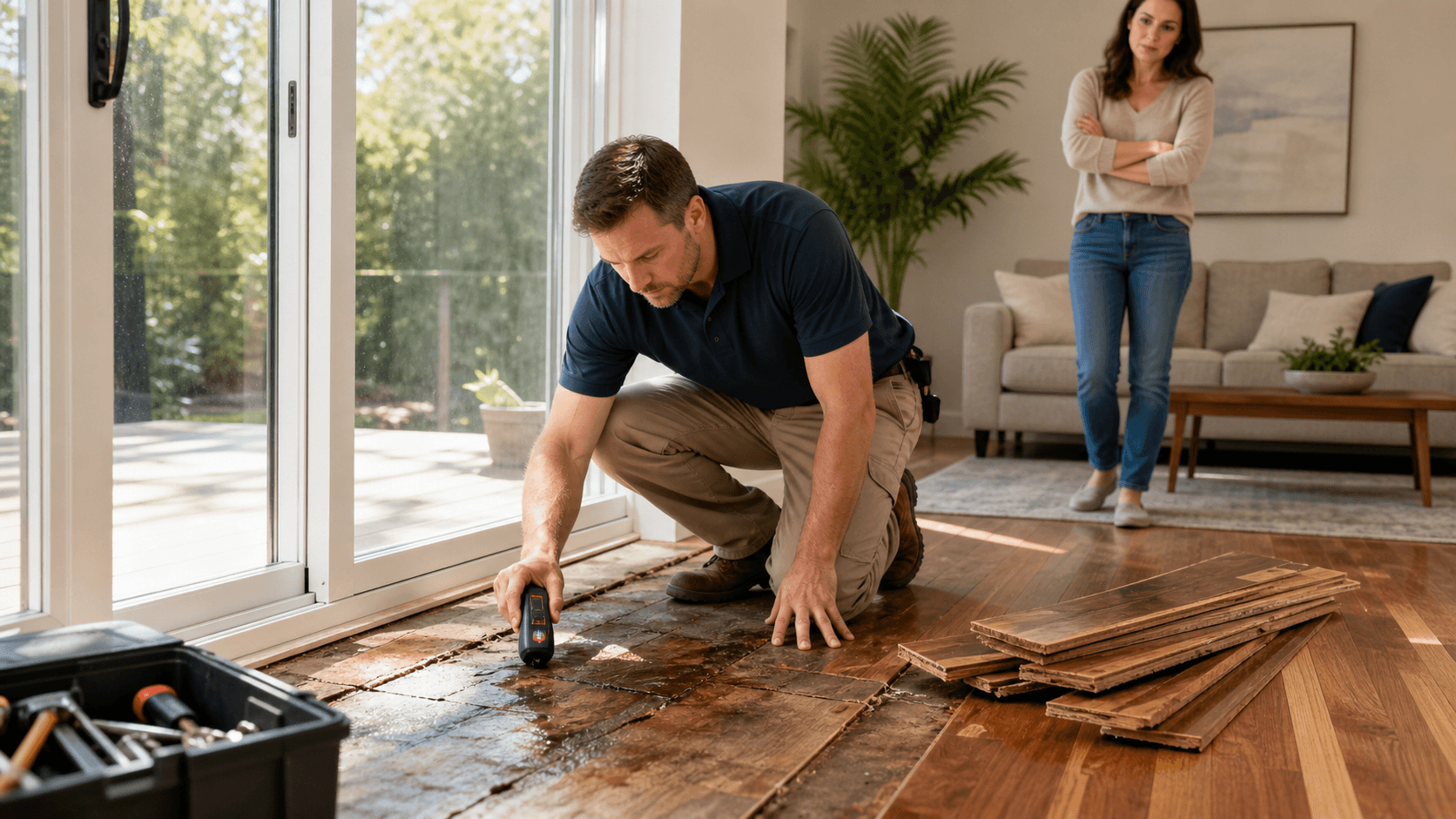
- Dark patches slowly appearing through finished floors
- Uneven bumps that were not present during warmer weather
- Musty smells in tight areas like hallways or closets
These conditions do not develop overnight. They build quietly over several weeks, which makes early fall a key moment for discovery. Moisture that stayed hidden all summer may finally start to rise as the temperature drops and fall air seeps in. Flooring ends up caught in the middle of conflicting forces, warm underneath, cooler above, and water pushing in from within.
When small issues like minor expansion are ignored, they often grow worse going into winter. Testing during these early signs allows us to map out what is rising to the surface and how strongly it is affecting the floor's condition.
What Floor Testing Can Uncover in Early Fall
By this point in the season, some changes are becoming visible. But even when floors look fine, slight shifts in moisture levels below the surface may already be putting pressure on adhesives or causing subfloors to loosen. Fall is a great time to check what is happening where eyes cannot easily go.
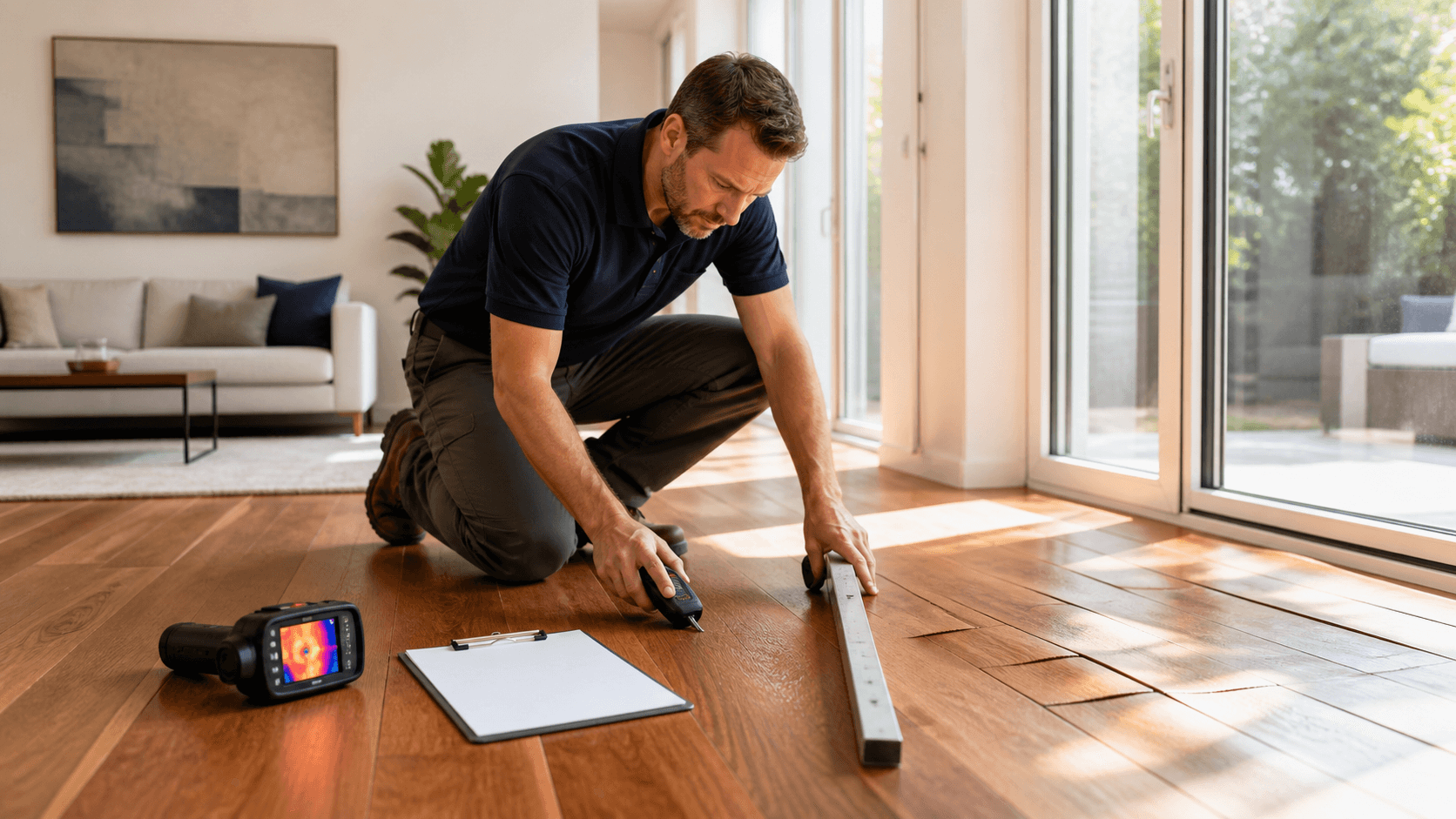
- Surface readings catch active humidity just below the flooring layer
- Slab or probe testing gives insights into how deep the moisture goes
- Core sampling (if needed) helps pinpoint trapped pockets under larger systems
Depending on the material, tile, laminate, engineered wood, we use different testing methods. Each gives us a clearer look at what is building up and where. This kind of information helps homeowners make smarter choices. Sometimes the floors just need time to rest and acclimate. Other times, it makes more sense to schedule small repairs before winter locks in dampness that is already present.
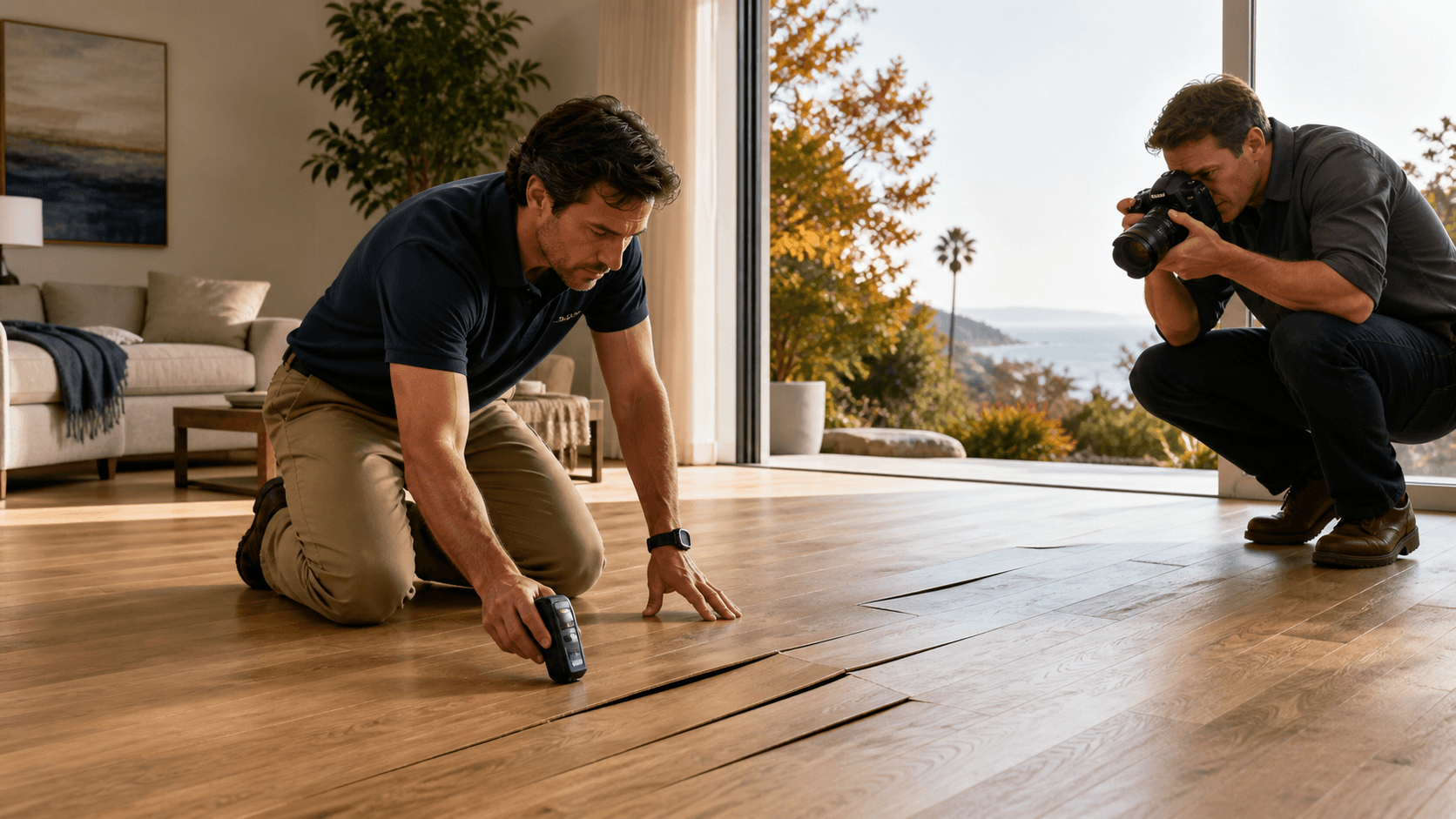
- At OC Flooring Inspection, we use a mix of moisture meters, in-slab probes, and core samples to give property owners a complete picture of their flooring health.
- Our fall floor test reports are used by contractors, managers, and homeowners for both repairs and warranty support.
Early fall testing gives us the breathing room to consider both options carefully. We are not guessing. We are looking at timing, flooring type, and what the slabs are telling us.
Why Fall is a Smart Time to Investigate Indoor Flooring Conditions
Fall is that narrow window between the highs of summer and the storms of winter. The air has calmed down, outdoor temperatures are not swinging wildly, and indoor use of HVAC systems sits in a transition. That means we can run tests in fairly balanced conditions, neither too dry nor too wet.
This balance allows for:
- Stable moisture readings over several days
- Clearer comparisons between different rooms
- Better prediction of how the floor will behave when winter heating starts up
One of the biggest reasons we like this time of year for testing is prevention. The early part of fall lets us catch things before they shift too far. Floors that get checked in September or October have a better chance of riding out winter with fewer surprises. We have seen how small findings now can stop more complicated repair discussions in January.
A quick test does not always mean something is wrong. Sometimes it confirms that the floor is holding steady. But it is better to know while you still have some dry-weather days left on the calendar than to wait and deal with swelling or lifting once the rains come.
Protect Your Floors Before the Rain and Cold Arrive
Orange County does not see the same level of wet winter weather as other parts of the country, but when it does rain, the ground response can be quick and uneven. Water under slabs can pool in strange spots, slab edges cool faster than centers, and indoor floors pay the price when something shifts unexpectedly.
We know how silent this damage can be. It begins behind the walls and just below your feet. By the time your floor shows its first signs of movement, moisture may have been pushing on it for weeks.
Floor testing in Orange County during the start of fall is not about reacting to big problems. It is about heading them off. Small stress cracks or soft sway in a section of flooring might mean something deeper is changing. When we find out early, we can soften the cost and the repair.
Season after season, the floor holds its spot. It gets walked on, warmed up, cooled down, and pushed at from every direction. Giving it a moment of attention in the calm of fall helps keep it stronger through all that comes next.
At OC Flooring Inspection, we help Orange County homeowners identify early signs of floor stress before bigger repairs are needed. We know local weather and moisture changes can affect your flooring in unexpected ways, so our process is designed around timing, climate, and your home's unique materials. If you have started to notice even small changes, scheduling floor testing in Orange County is a smart way to understand what is happening below the surface. Reach out to us today and let us take a closer look together before winter arrives.