The end of summer in Southern California doesn't just bring heat, it brings long days of dry air and sunlight hitting the same surfaces over and over. Hardwood floors deal with a lot during these weeks, even in buildings that appear cool and shaded. Most of the damage caused during this season does not happen all at once. It builds slowly, almost invisibly, until someone walks across the room and notices a board has shifted or a finish looks hazier than before.
That is where hardwood flooring inspectors come in. By this time of year, we have seen how heat wears on flooring, especially near glass doors, open windows, or any place that gets regular light. Our goal is always to catch the small signs of heat damage early, before they spread into bigger problems by fall.
How Heat Affects Hardwood Flooring in SoCal
Hardwood reacts to weather changes more than many people realize. Even inside a building, Southern California's late-summer heat can cause real shifts in how wood behaves.
- As the air dries out, moisture inside the boards starts to evaporate. This can lead to shrinking, which creates small gaps between planks that used to fit snugly earlier in the year.
- Persistent sunlight through windows can cause some parts of a floor to fade while others darken. The result is uneven tones across the room that do not go away with cleaning or refinishing.
- For engineered floors or any hardwood types that rely on adhesives, we watch for glue weakening. High indoor temperatures near vents or glass can dry out glue lines or cause bonding failures where layers start to separate.
These subtle shifts build up over a few months, and by late August or early September, they are often at their peak. Even buildings with good insulation and climate control cannot always keep flooring completely stable during long stretches of dry heat.
- At OC Flooring Inspection, we use moisture meters and visual assessments to identify damage and protect hardwood floors in Orange County homes and businesses.
Signs That Heat is Already Causing Damage
We often hear from building managers or homeowners who just "noticed something off" with their floors. Heat damage tends to creep in like that, quiet, slow, and easy to miss until it becomes a trip hazard, a squeak, or a visual flaw that will not stay hidden.
- Gaps between planks that look wider than they did in spring might not close back up when humidity returns. That often points to permanent shrinkage from over-drying.
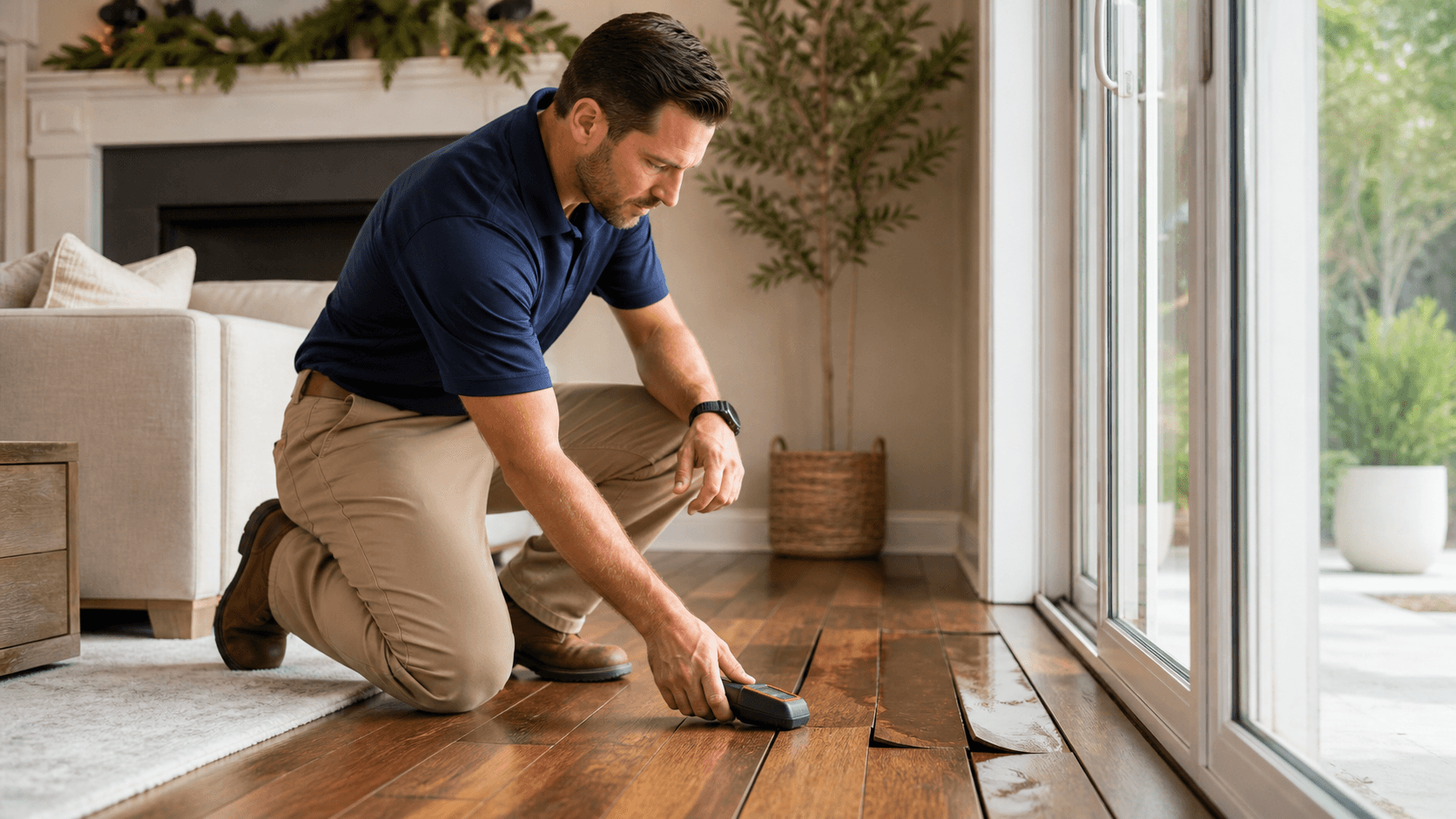
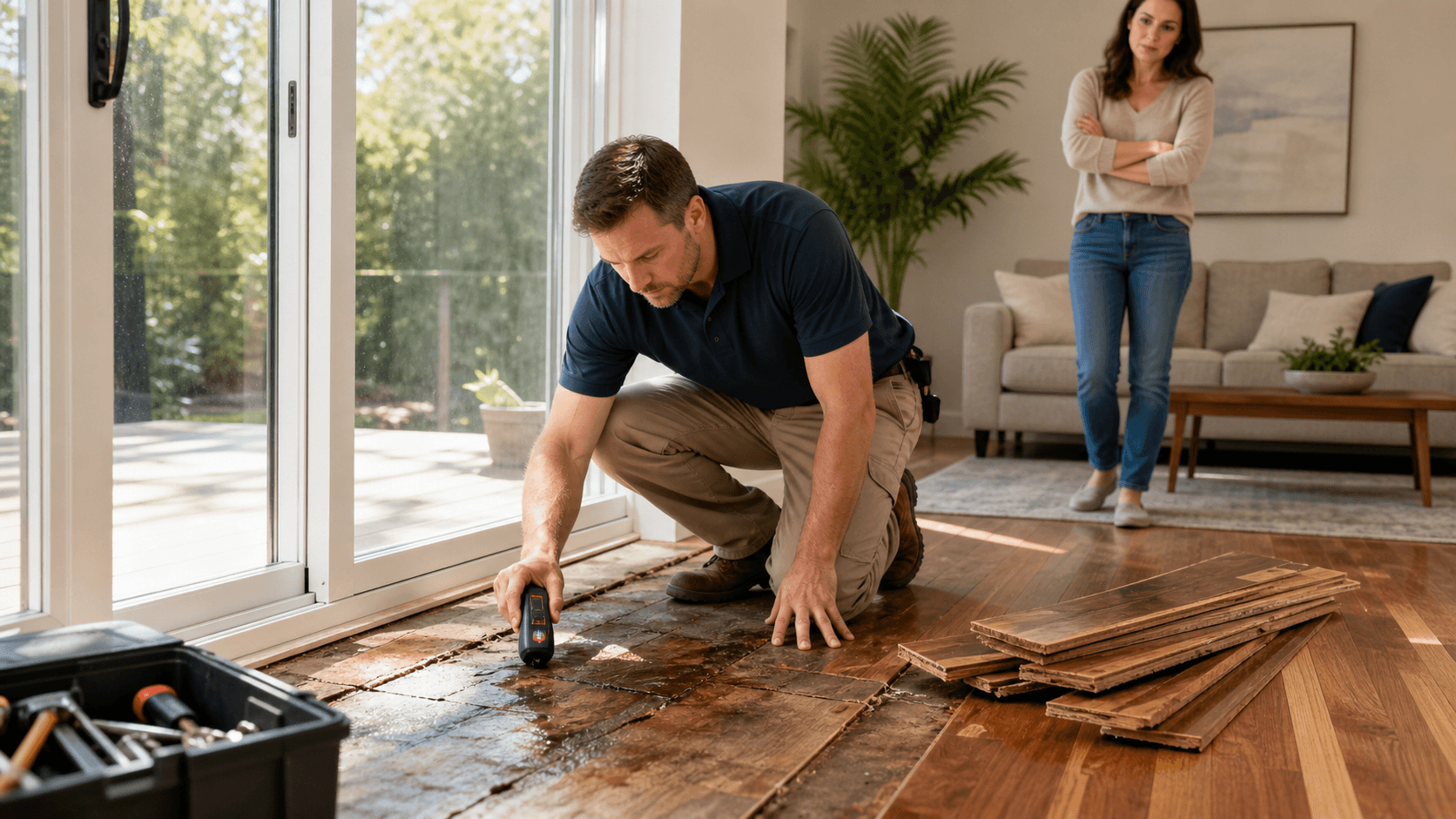
- Warped or cupped boards usually appear in sun-exposed parts of the room. It is common around French doors, large windows, or anywhere heat pools daily.
- Cracking or foggy finishes can show up just beneath consistent sunlight. Sometimes it looks like a cloudy film, other times like tiny cracks where the sealant could not flex with the heat.
- Older floors may start to feel almost brittle underfoot. That dry, hollow feel can mean the wood has lost too much internal moisture.
- OC Flooring Inspection is a California-licensed contractor offering certified hardwood floor inspections, written reports, and expert dispute support.
These signals may seem small at first, but every one of them tells us something about how the floor is responding to the season. Waiting too long can mean these small signs grow into costly replacements.
What Hardwood Flooring Inspectors Look For During Late Summer
By August, we focus on subtle signs that show how well the floor has held up to pressure from SoCal heat. Every site behaves differently depending on layout, floor material, and summer exposure.
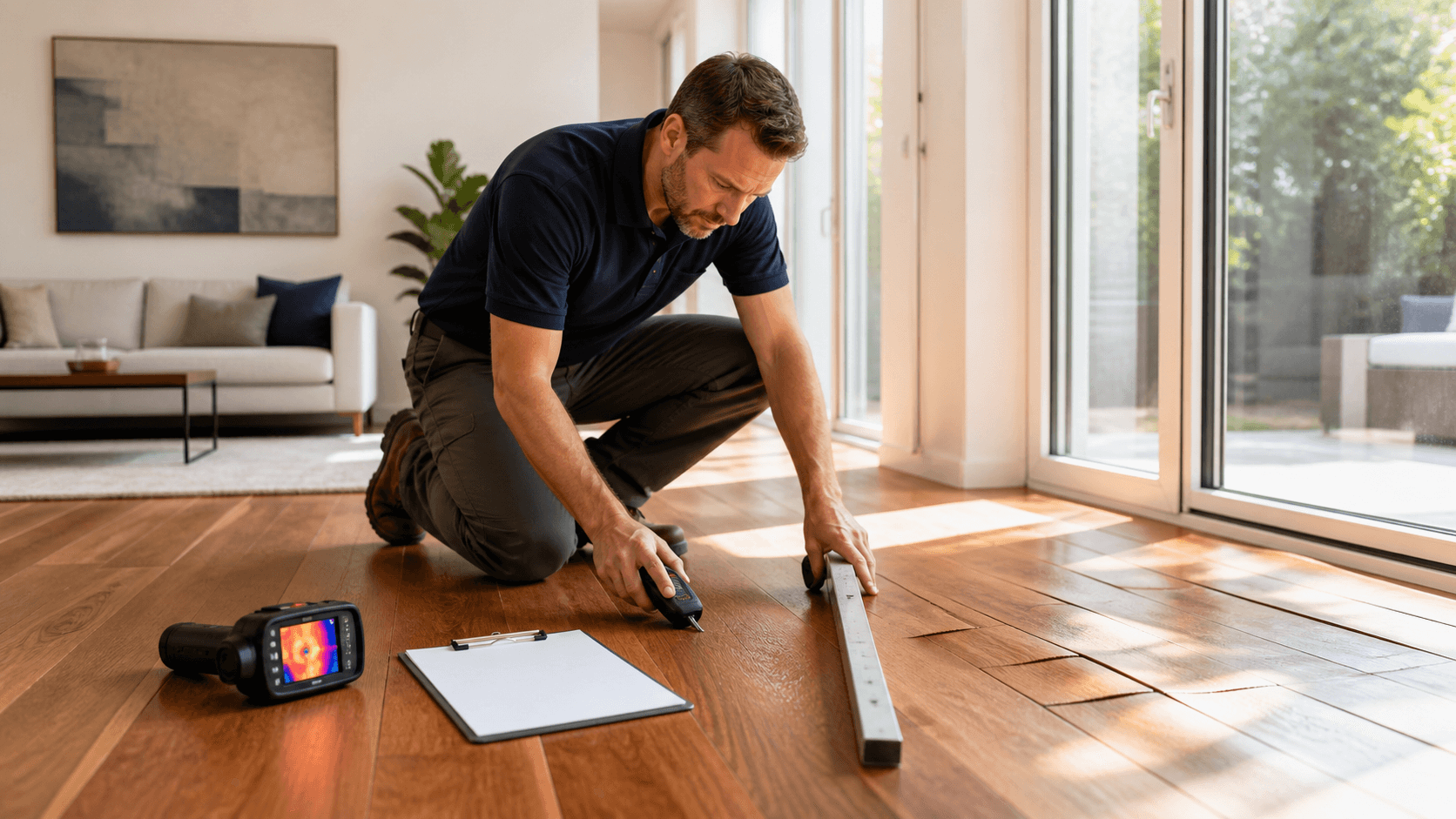
- We use moisture meters to measure dryness deep within the boards. Floors can feel normal on the surface but still hold hidden imbalance below.
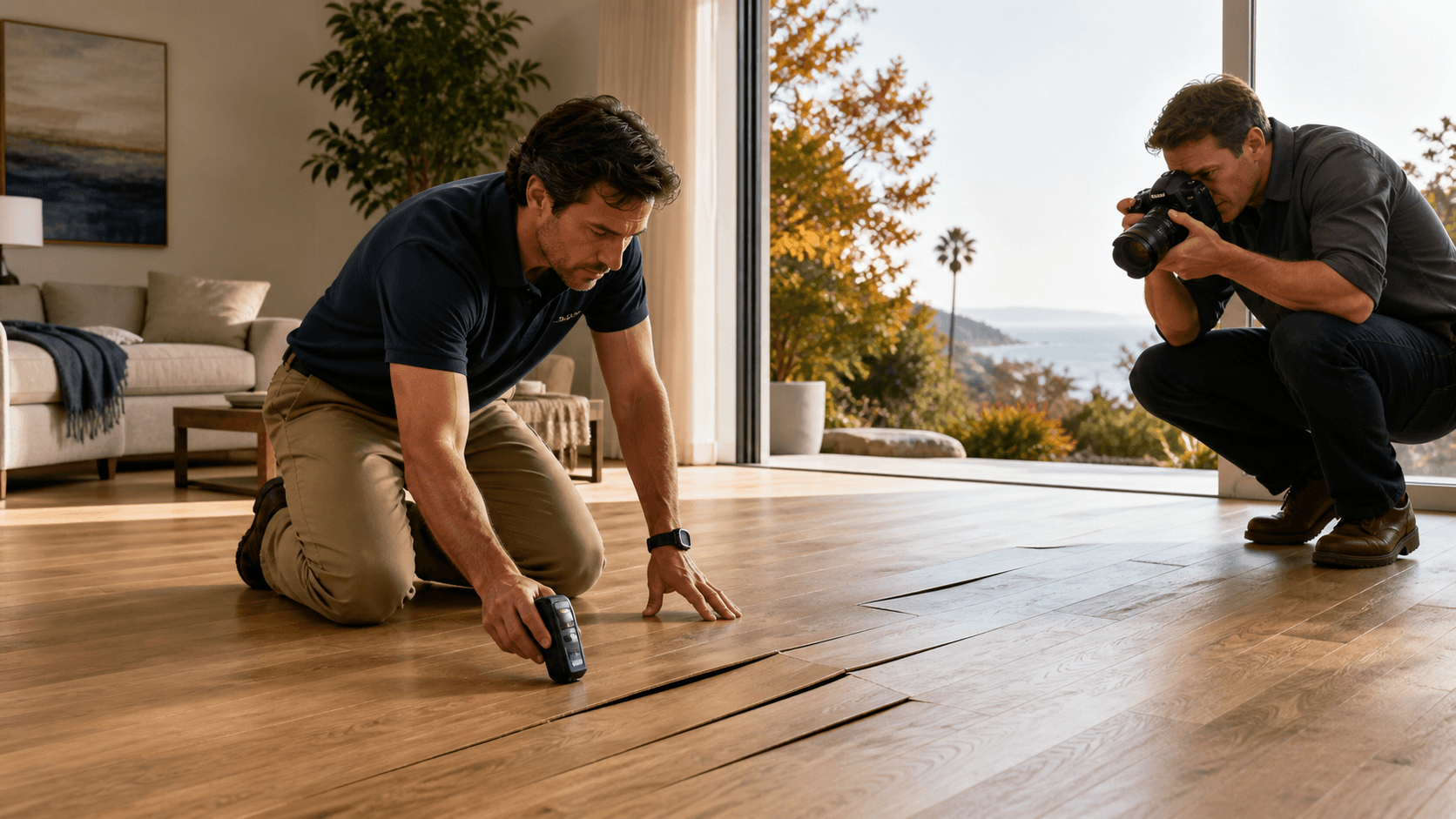
- We look for movement between joints, not just open gaps, but shifting directions that come from temperature swings or direct sunlight.
- HVAC vents placed too close to flooring sometimes dry out small sections faster than the rest. These concentrated heat zones can be easy to miss without close inspection.
- If available, we ask about the floor's history. Different materials react differently to SoCal summer cycles. Some types hold shape better than others, depending on how they were installed.
The goal is always the same. Spot early signs of stress while the floor is still recoverable.
How to Keep Flooring Safer Through the Hottest Months
You cannot control Southern California's late-summer heat, but you can put a few simple safeguards in place. The right steps now can help keep hardwood floors from shifting or drying out too much before fall.
- Keep blinds or curtains closed during peak sun hours, especially near large windows or open glass doors.
- Rugs can break up heat exposure and reduce fade marks in high-light areas.
- Keep interior temperatures stable. Even small drops in humidity can make a difference over weeks. Make sure ventilation is not blowing hot air directly onto wood floors.
- Plan inspections before fall humidity returns. Once moisture starts rising again, damage from the dry season may be harder to track, since the changes reverse themselves at the surface while leaving deeper shifts underneath.
A little attention now makes it easier to handle anything that shows up later.
Staying Ahead of Invisible Damage
Heat-related damage does not always give you a big warning. It does not have to start with a loud crack or a warped plank you trip over. Most of what we find each year started as something minor, small movement, a faint change in texture, a finish that did not bounce back. Those are the kinds of signals that trained eyes know how to spot, especially in late summer when flooring is under the most stress.
By the time weather shifts and moisture comes back into the picture, hardwood may already be struggling to return to its original state. We have learned that seasonal changes show up in layered ways, first in dryness, then in movement, followed by changes in finish and bonding. Watching for those signs early is what helps buildings in Orange County avoid bigger issues later on.
Summer heat in Orange County can dry out floors, weaken finishes, and create lasting issues if left unaddressed. We know how minor concerns can turn into bigger problems when hidden damage goes unnoticed. Now is the smart time to trust hardwood flooring inspectors who understand how temperature impacts wood beneath the surface. Contact OC Flooring Inspection to schedule an appointment before deeper damage develops.