Introduction
When summer hits Orange County, things start to change underneath the surface. Heat pushes moisture trapped inside concrete slabs closer to the top, even when the surface looks completely dry. That can cause problems for flooring installs that depend on stable, dry conditions.
Concrete might seem like a solid, safe base, but without checking for moisture, we're only guessing how ready it really is. Summer weather makes this more complicated because everything dries faster on the outside without solving what's happening underneath. Concrete moisture testing in Orange County helps us spot issues before the heat causes damage that's harder to undo. It's a smart way to start summer projects off with fewer risks.
Why Summer Makes Subfloor Moisture More Noticeable
Warm weather speeds up some drying, but it doesn't always mean the concrete is completely ready. In fact, we tend to see more signs of hidden moisture stress once the temperatures rise.
- Heat draws moisture up from deep layers, so the top of the slab might feel dry while the middle still holds water
- Floors can shrink or curl if the surface dries before the rest of the slab is balanced
- Many projects get scheduled fast during the summer rush, and if nobody checks moisture levels, the work starts too early
We've learned that relying on surface appearance alone makes summer installs riskier. The most common surprises come not from what's seen, but what's missed.
Flooring Installations That Depend on Moisture Accuracy
Some flooring materials are more sensitive than others. The summer heat just makes those risks more noticeable. We've seen well-planned installs go sideways because of moisture that should have been caught earlier.
- Adhesives can't bond well when moisture levels are too high, especially with pressure-sensitive glues
- Vinyl and laminate floors can lift or buckle over time without obvious warning signs
- Wood expands in humid conditions, and if the slab still holds moisture, boards may move or swell
Getting a solid understanding of moisture levels changes how we pick products and when we install them. That's especially true in early and mid-summer when drying can seem faster than it really is.
What Moisture Testing Can Reveal That Visual Checks Can't
Looking at a floor only tells part of the story. It might appear ready, but underneath, the conditions may tell a very different truth. Visual checks can't measure how fast moisture is moving through the slab or whether it's evenly distributed.
- Testing shows how much water vapor the slab is releasing in real-time
- It identifies cold spots or uneven areas not visible without tools
- Small issues found early can stop bigger repairs down the line
It's not just about stopping damage during installation, it's about giving materials the best shot at lasting long after the job is done. We've run into flooring issues that traced back to something simple like a slab that never finished drying beneath the surface.
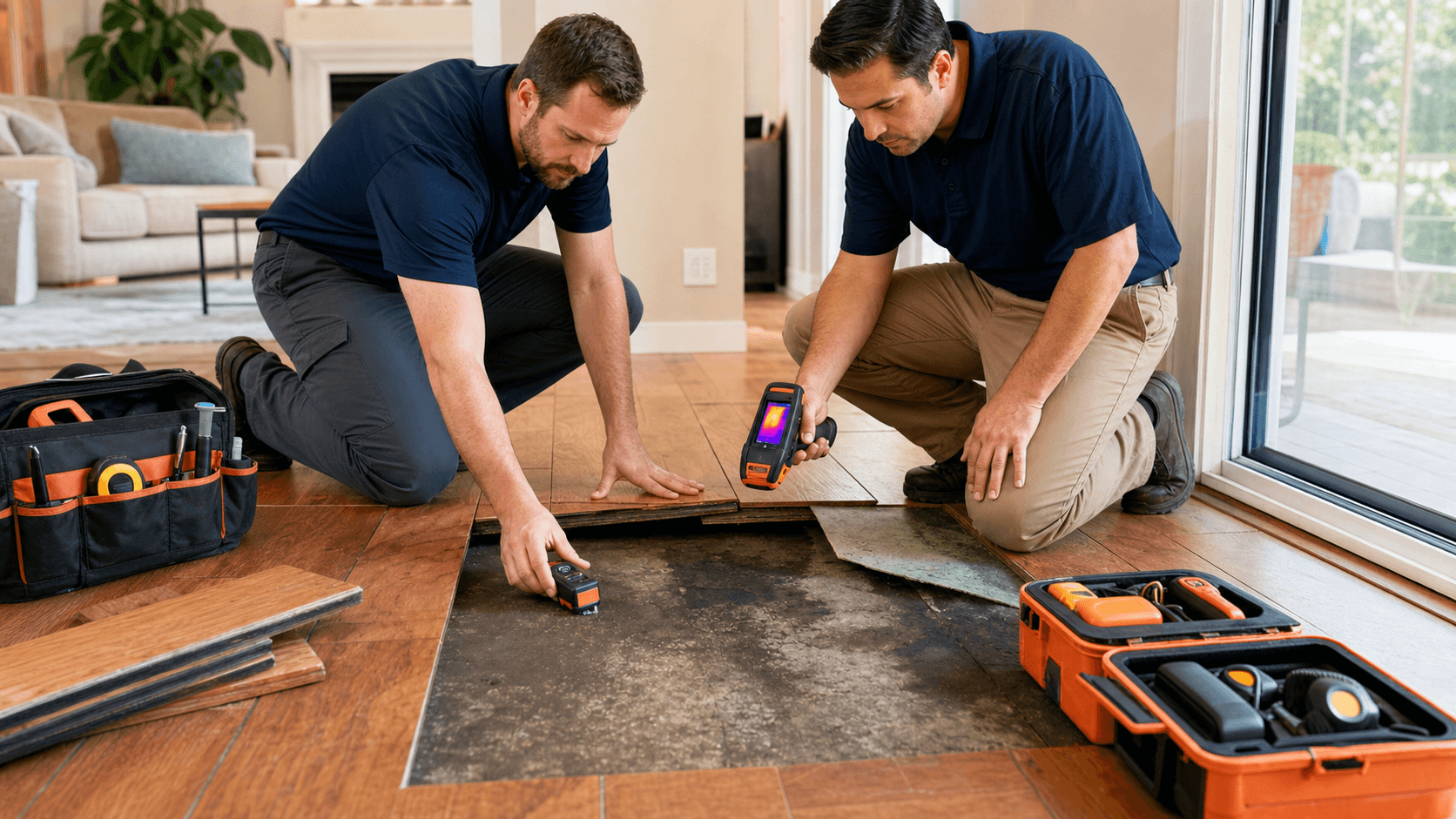
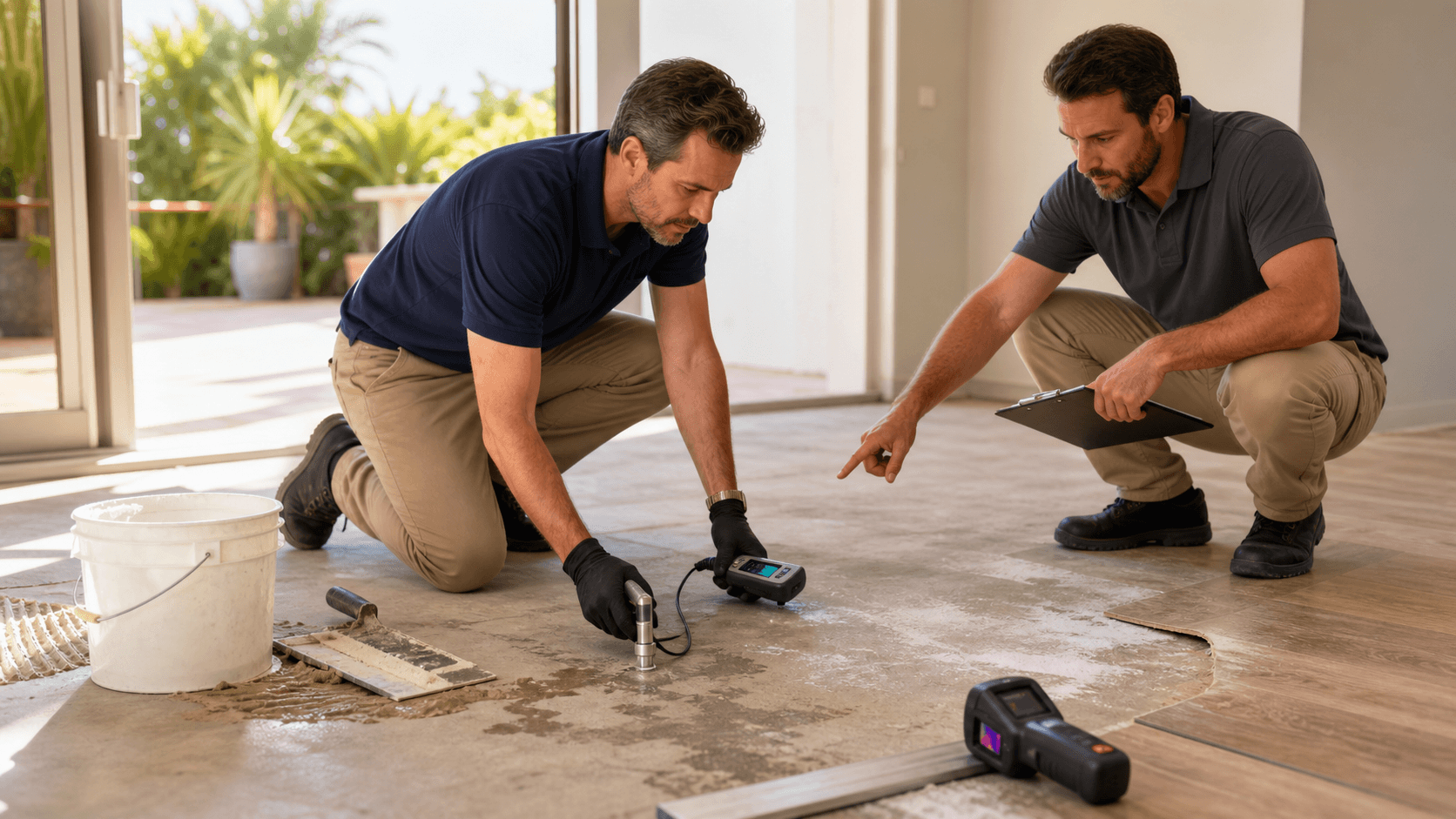
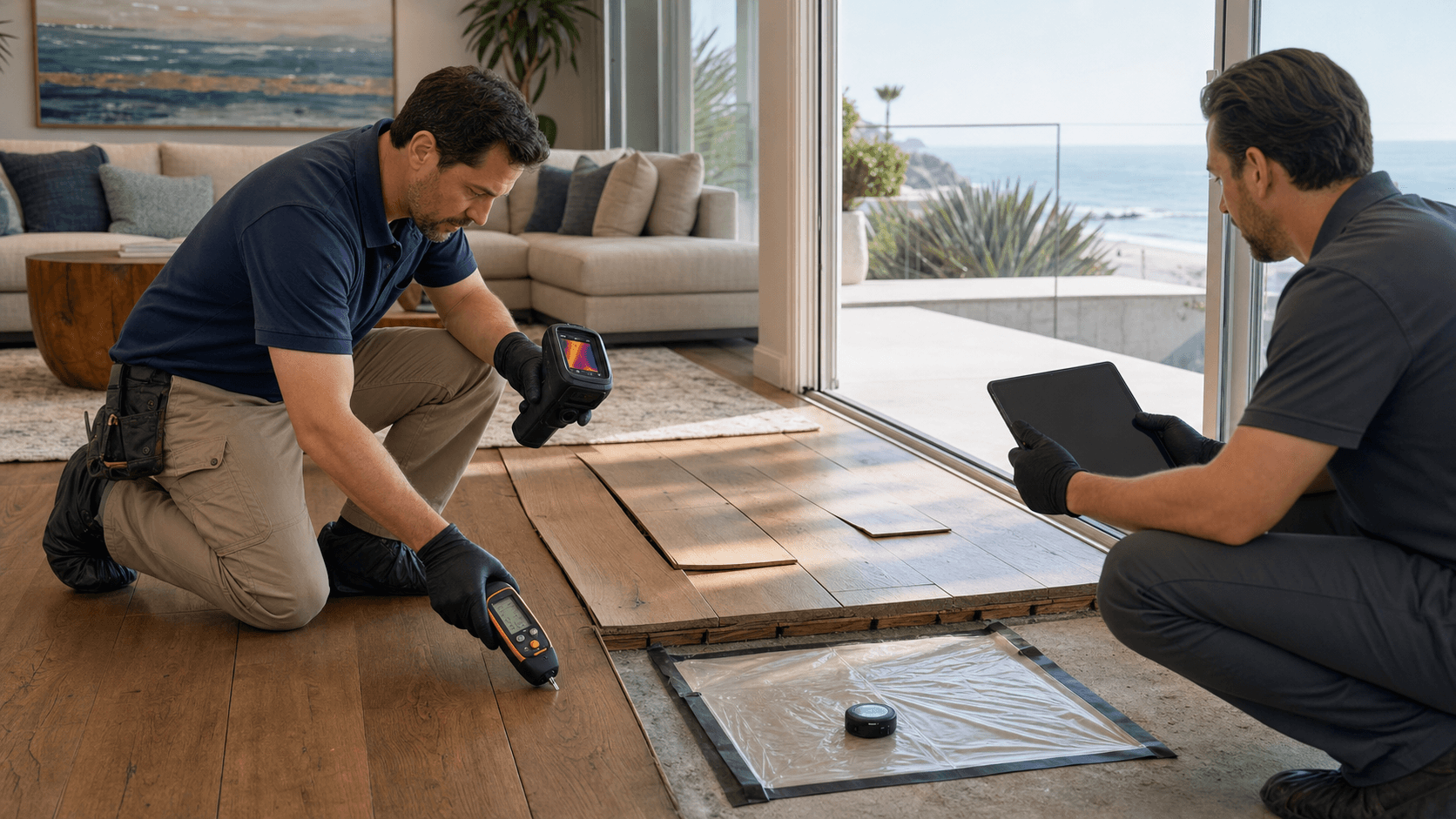
- At OC Flooring Inspection, we use in-slab probes, surface meters, and calcium chloride kits for concrete moisture testing in Orange County, always reporting full findings for owners and contractors planning summer work.
Common Conditions Found in Orange County Slabs
The soil and weather in Orange County can create conditions that make subfloor moisture stick around longer than expected. From the coast to inland properties, buildings often face different exposure levels.
- Near the ocean, higher humidity levels in the air and ground can keep concrete from drying evenly
- Older properties may lack moisture barriers, allowing water to rise through the slab
- Summer yard watering and changing soil pressure can push water under structures, especially in homes or buildings on a slope
Some of these issues don't show themselves until the outside temperature starts climbing. That's when we see new cracks, lifting seams, or unusual discoloration.
- Our service documents every reading, making it easier to plan repairs, determine warranties, or answer project questions for any professional involved.
Safer Project Planning Starts Before the Heat Hits
Waiting until the peak of summer to look at moisture is often too late. By then, schedules are tight. Deliveries are lined up. Installers have back-to-back jobs. Testing early helps remove some of the risk.
- Testing results help us pick products rated for the current slab conditions
- If the slab needs more time to dry, we can shift timelines before anyone gets delayed
- It's easier to adjust material storage or prep steps when we plan for weather-related delays
When we make these choices early, it protects the budget and the install from scrambling later on. That's especially true during new builds or when installing high-end materials that carry more risk if applied too soon.
Why Early Steps Lead to Longer-Lasting Floors
Rushed installs usually leave behind clues, shifting tiles, loose seams, or cupped floorboards. These problems don't always show up right away. But we've seen them grow as summer wears on and indoor temperatures start to rise.
- Summertime moisture problems can weaken the installation slowly, reducing product life
- Floors put down while moisture is too high often need rework or cause callbacks for repairs
- When jobs start with proper testing and prep, floors tend to last longer and settle more evenly
We prefer to get ahead of these risks, starting with clean data before the project begins. Orange County's dry heat masks what's still happening below the surface. Moisture doesn't disappear just because the top layer feels dry. Planning early, especially before the peak of summer, takes pressure off every step that comes after.
Planning for hot weather involves much more than choosing the right materials. At OC Flooring Inspection, we always begin with a thorough assessment of conditions beneath the surface, especially when working with slabs that may retain moisture. Conducting early evaluations helps us understand how seasonal changes impact each job site. For summer installations in Orange County, now is the time to address the essentials like concrete moisture testing in Orange County. Connect with our team to make sure this important step is handled before temperatures rise.