Introduction
As Southern California moves toward summer, flooring issues can show up fast. The change in temperature and humidity levels affects what's hidden underneath, not just the surface. If floors start shifting, peeling, or feeling soft, it often points to moisture trapped below. That's where substrate testing in Orange County helps. With the season heating up, now's the right time to check the layer underneath before that hidden moisture creates a bigger problem. Waiting too long could mean adhesive failure, bumps under flooring, or expensive repairs during peak heat.
To protect flooring investments, homeowners and contractors need to look beyond appearances and focus on what's happening beneath the surface. While the effects of a failing substrate might be overlooked initially, their impact becomes very noticeable as outside conditions change. That's why understanding the role of substrate moisture is so valuable before summer arrives.
What Substrate Testing Checks for Before Trouble Starts
Substrate testing allows us to look at what's going on below your flooring before you notice any changes. Many problems start from within the slab itself, even if everything looks fine on the surface.
- We check for excess moisture in the concrete or subfloor.
- We look for signs of past water damage that might be hiding beneath the finish.
- We figure out whether the area is ready for new flooring or if it needs time to dry or be repaired.
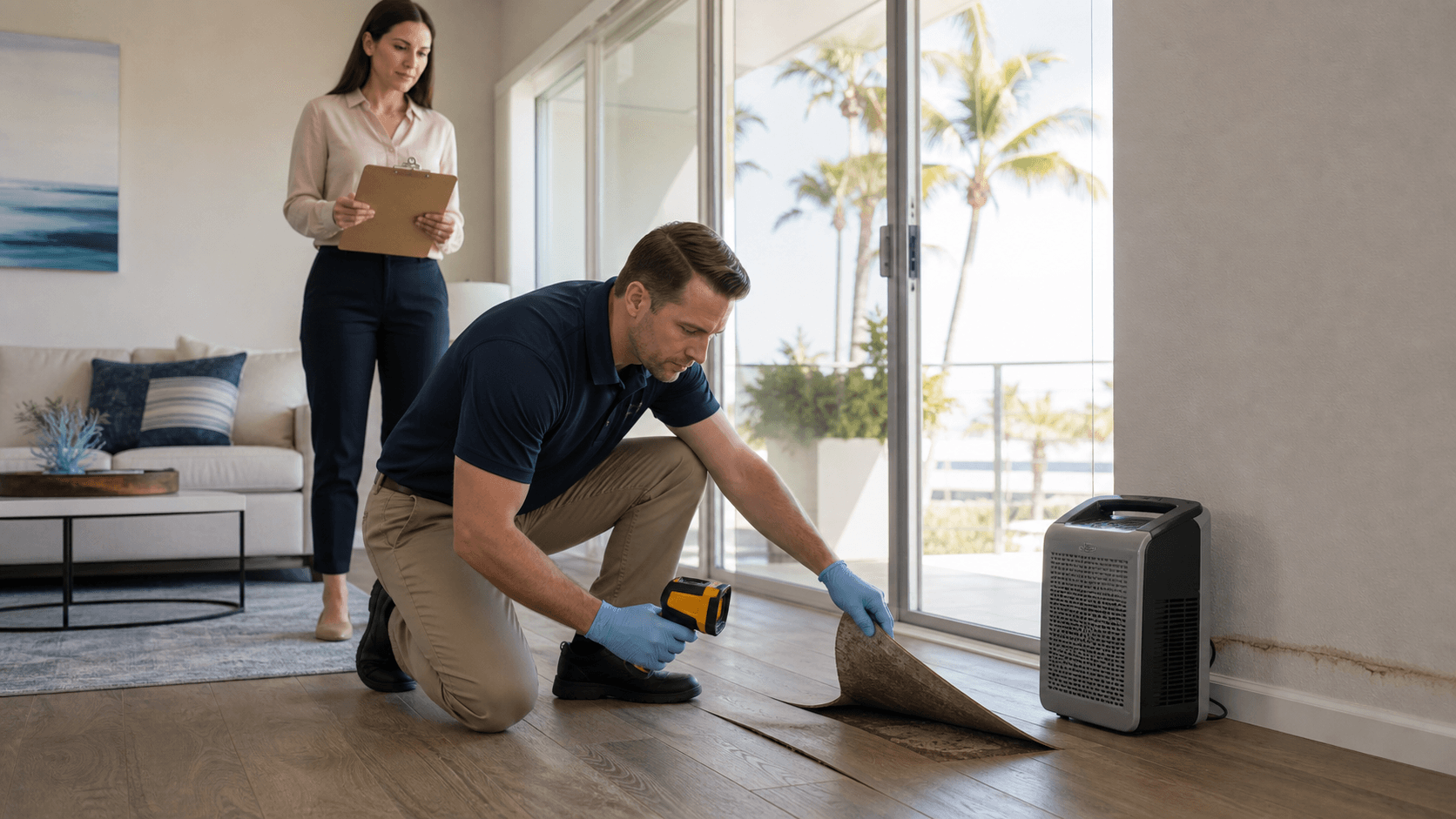
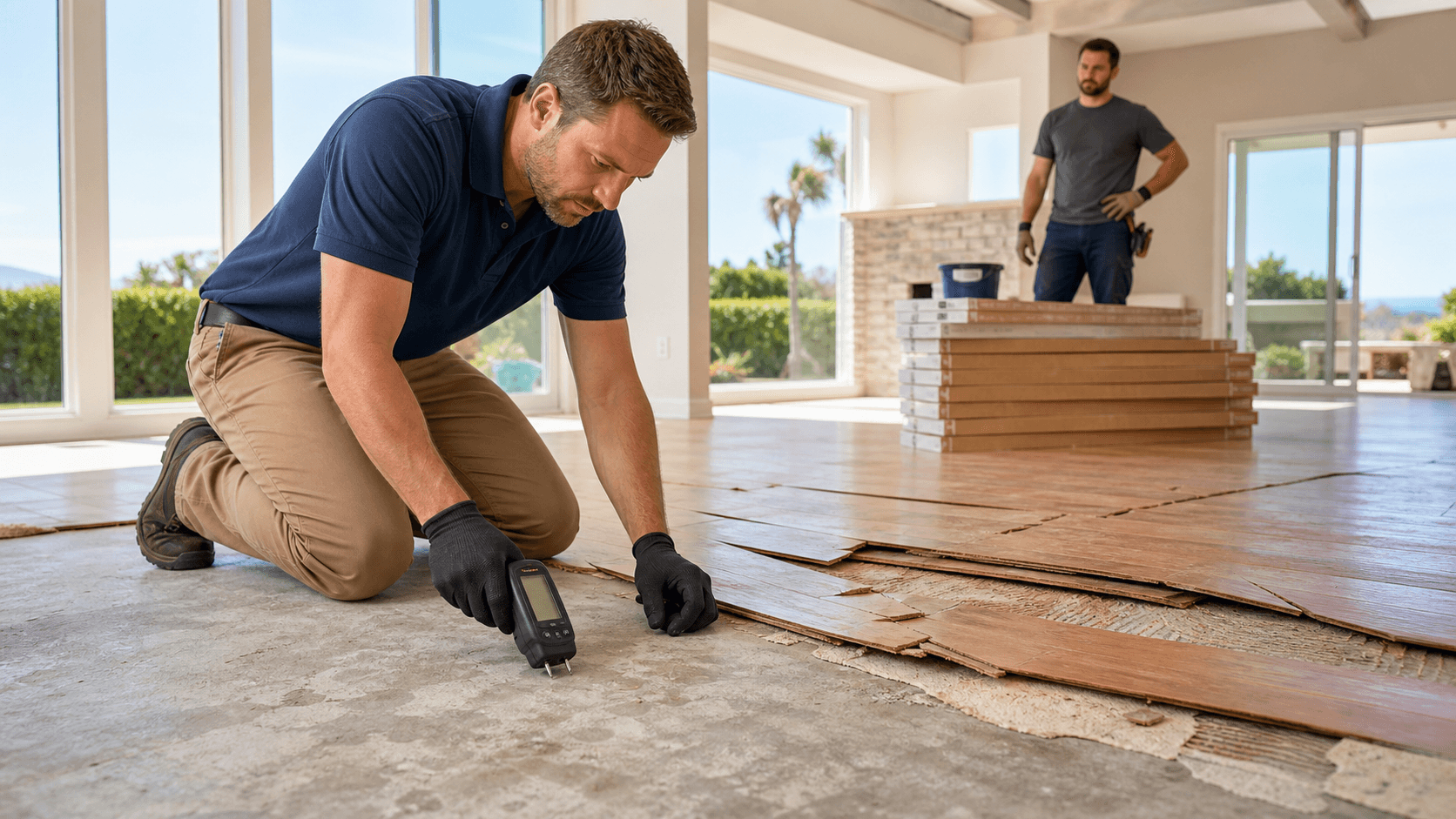
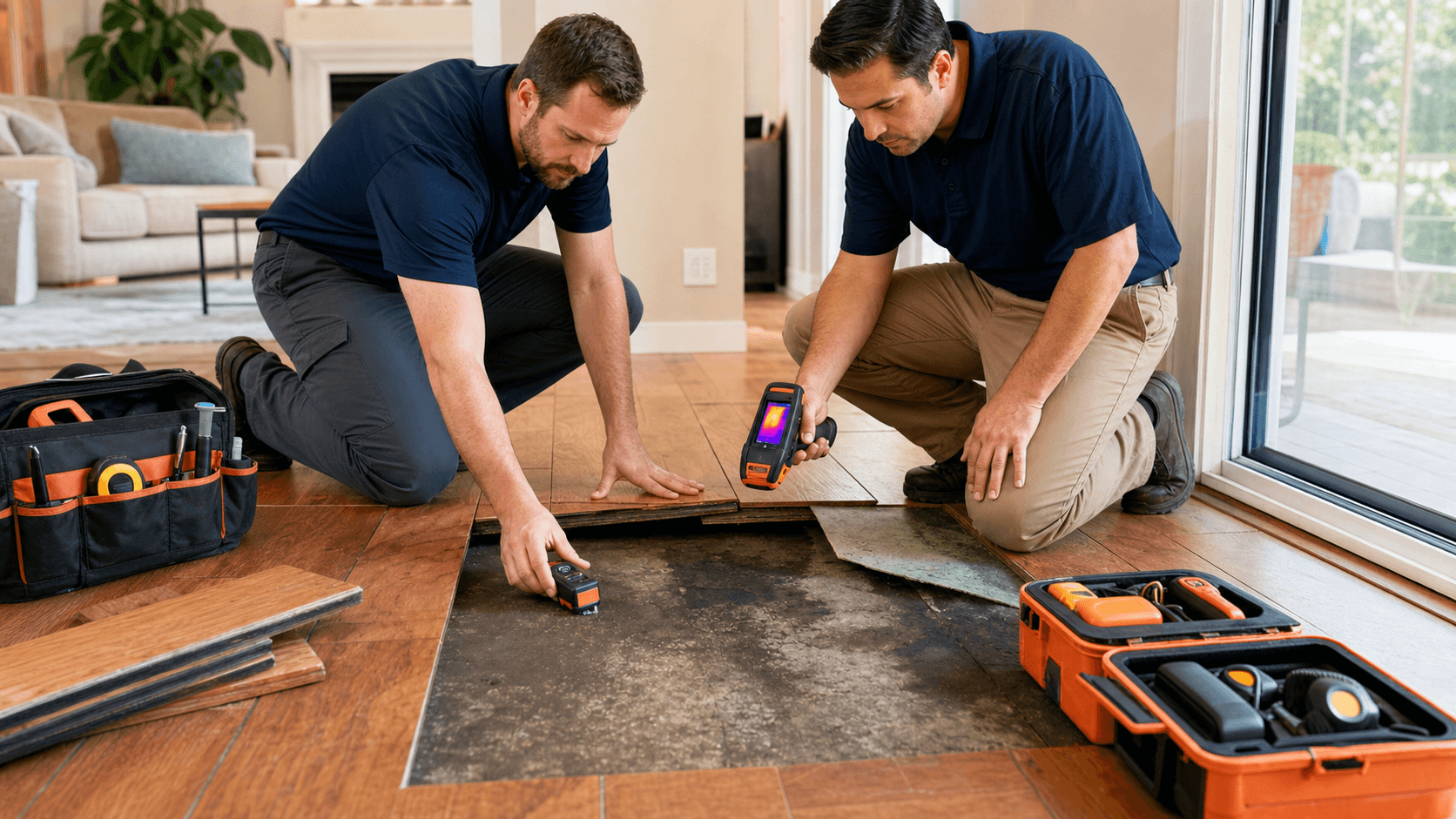
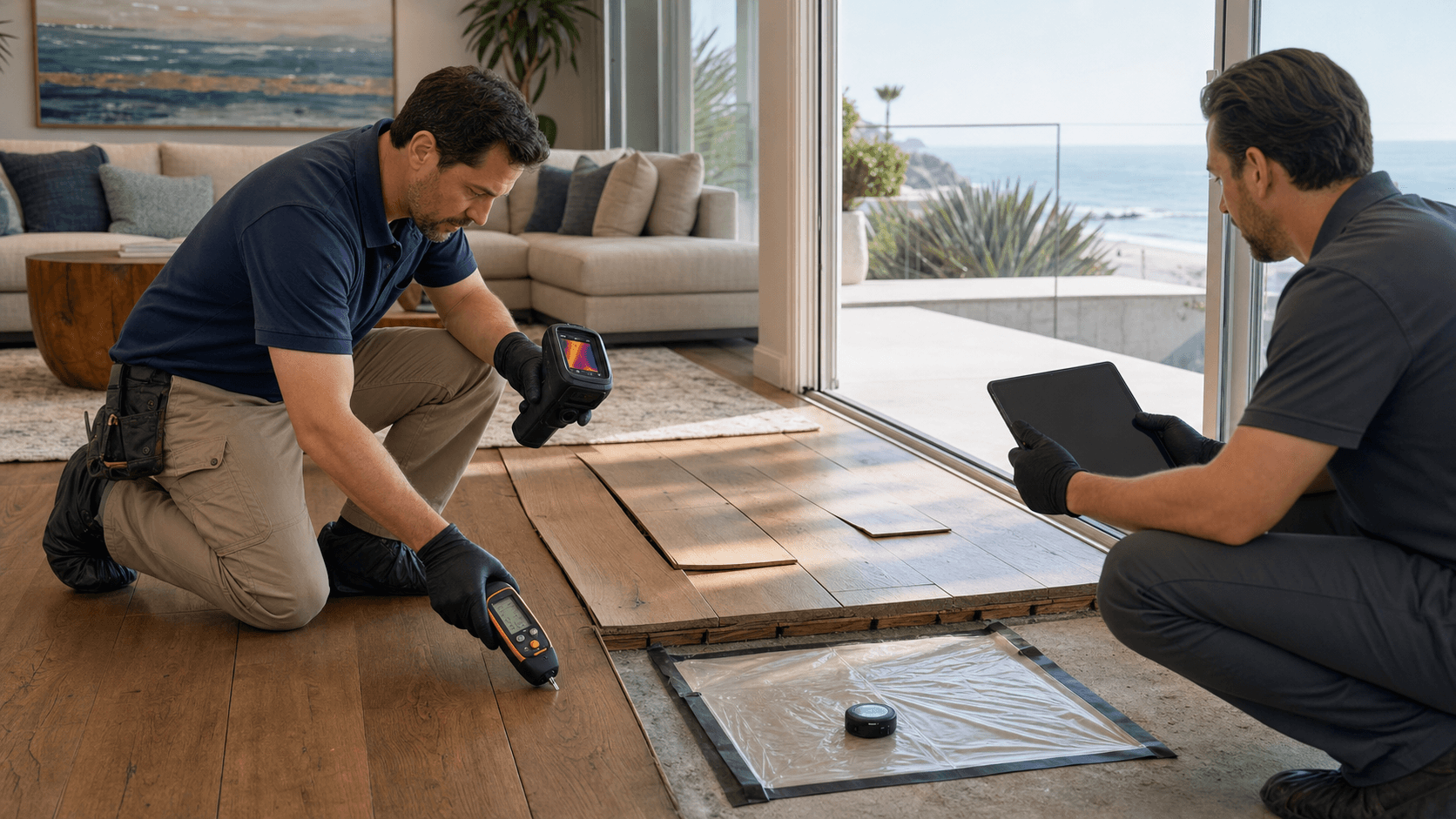
- At OC Flooring Inspection, we use in-slab probes, surface meters, and detailed observation to identify existing issues and risks for Orange County homes.
This testing is especially helpful before a new floor is installed, but it's just as useful when a leak or plumbing issue has been recently fixed. If that base layer still holds dampness, putting flooring on top can lock it in, leading to swelling or early failure later.
Homeowners often underestimate how easily water can seep beneath flooring. Even small spills, undetected leaks, or condensation may allow moisture to accumulate beneath the finished surfaces. In addition, older properties or those located in shaded, cooler zones tend to experience moisture retention for longer periods, increasing the risk of hidden substrate problems.
How Summer Conditions Increase Flooring Risk
Summer in Orange County brings higher temperatures and humidity, both indoors and out. These seasonal shifts are enough to change how a floor behaves, especially if the substrate wasn't fully dry when flooring was put down.
- Concrete slabs can start sweating in hot, damp weather, especially in rooms that stay closed during the day.
- When people use air conditioning to cool things down quickly, it creates sharp drops in temperature that can cause moisture in the air to settle on the floor's surface.
- Any leftover wet spots below the floor can expand when warm air meets cold material, weakening adhesives or causing buckles.
Even a small buildup of water under vinyl, laminate, or wood can turn into peeling corners, mold growth, or spongy spots. That's why it helps to understand these risks before they push small problems into larger ones.
Managing moisture takes on even greater importance in homes where air conditioning and strong sunlight battle for control. Subtle differences in indoor-outdoor temperatures can cause condensation below the surface, not just on glass or tile. When moisture moves up from the substrate, it may remain invisible until the signs of flooring distress become very obvious.
Where Substrate Problems Usually Show Up in Orange County Homes
Some spaces in Orange County homes are more likely than others to deal with flooring damage during summer. We see similar patterns year after year, especially in homes built on slabs or without basements.
- Ground-level rooms like living areas or garages, where the slab sits right beneath the finished floor.
- Bathrooms, laundry rooms, and kitchens, which have more contact with water and often lower venting.
- Spaces near large south- or west-facing windows and sliding doors, which get a lot of direct sun.
- Reports from OC Flooring Inspection help homeowners and contractors identify which areas need extra precautions or repairs before and after flooring projects.
These areas often deal with a hot-and-cool cycle through the day, which builds condensation. That mix of sunlight, water, and internal cooling means the substrate layer takes on a lot more stress than most owners think about.
It's also worth mentioning that flooring in high-traffic locations or spaces with frequent temperature swings is more susceptible to hidden damage. Having a targeted approach to testing ensures that the floors most at risk receive the attention they deserve, minimizing costly interventions later in the summer.
What to Expect from a Substrate Test
When we carry out a substrate test, we focus on getting clear and measurable answers. Even if no surface damage is present, the test can show whether there's water built up where you can't see it. We match that data against what different types of flooring need in terms of moisture tolerance.
- We use meters and probes to test the slab or subfloor for trapped water.
- The readings show whether the conditions are safe for common products like wood, vinyl, or engineered flooring.
- Based on those results, we recommend next steps like drying the slab longer, sealing it, or moving forward with the install.
This gives owners and installers a better grip on what to do next. Instead of guessing, they're working with hard data. If there's too much risk, testing makes that clear. If things are good, then there's peace of mind.
The benefit of professional testing is getting this guidance before committing to new flooring work or living through a season of preventable repairs. Substrate moisture results can inform the selection of adhesives, underlayments, and even finished flooring types, reducing the need for callbacks and warranty claims long after installation.
Getting Floors Ready for a Stress-Free Summer
With summer approaching, small preventative steps make a big difference. Substrate testing gives you one thing most people don't have after a flooring problem happens: a warning ahead of time. When the layer underneath is healthy, the whole floor has a better chance of lasting through heat, water, and daily wear.
- Testing limits how many repairs or re-installs you'll face later.
- It also extends the life of the floor by confirming that the base layer is solid and dry before it has to deal with summer conditions.
- And maybe most of all, it helps keep the floors you walk on every day from becoming a source of stress during a season when open windows, fans, and indoor-outdoor traffic all add new pressure.
Having that level of certainty makes it easier to enjoy the space. With so many changes happening inside and outside the home during warmer months, being confident in the floors beneath your feet can make a real difference. When the foundation is stable, everything above it works better.
Taking the time to resolve hidden moisture issues early brings peace of mind for the entire summer season. It means being able to enjoy your home without worrying about costly surprises or the inconvenience of unexpected repairs. A solid, dry substrate supports not only your flooring but the day-to-day life that happens on top of it.
Noticing soft spots, surface changes, or unexpected movement in your flooring can indicate hidden issues beneath the surface. Our team at OC Flooring Inspection offers detailed testing to identify moisture problems early, helping protect your Orange County home before the summer heat arrives. Schedule your substrate testing in Orange County with us today to stay ahead of potential concerns.