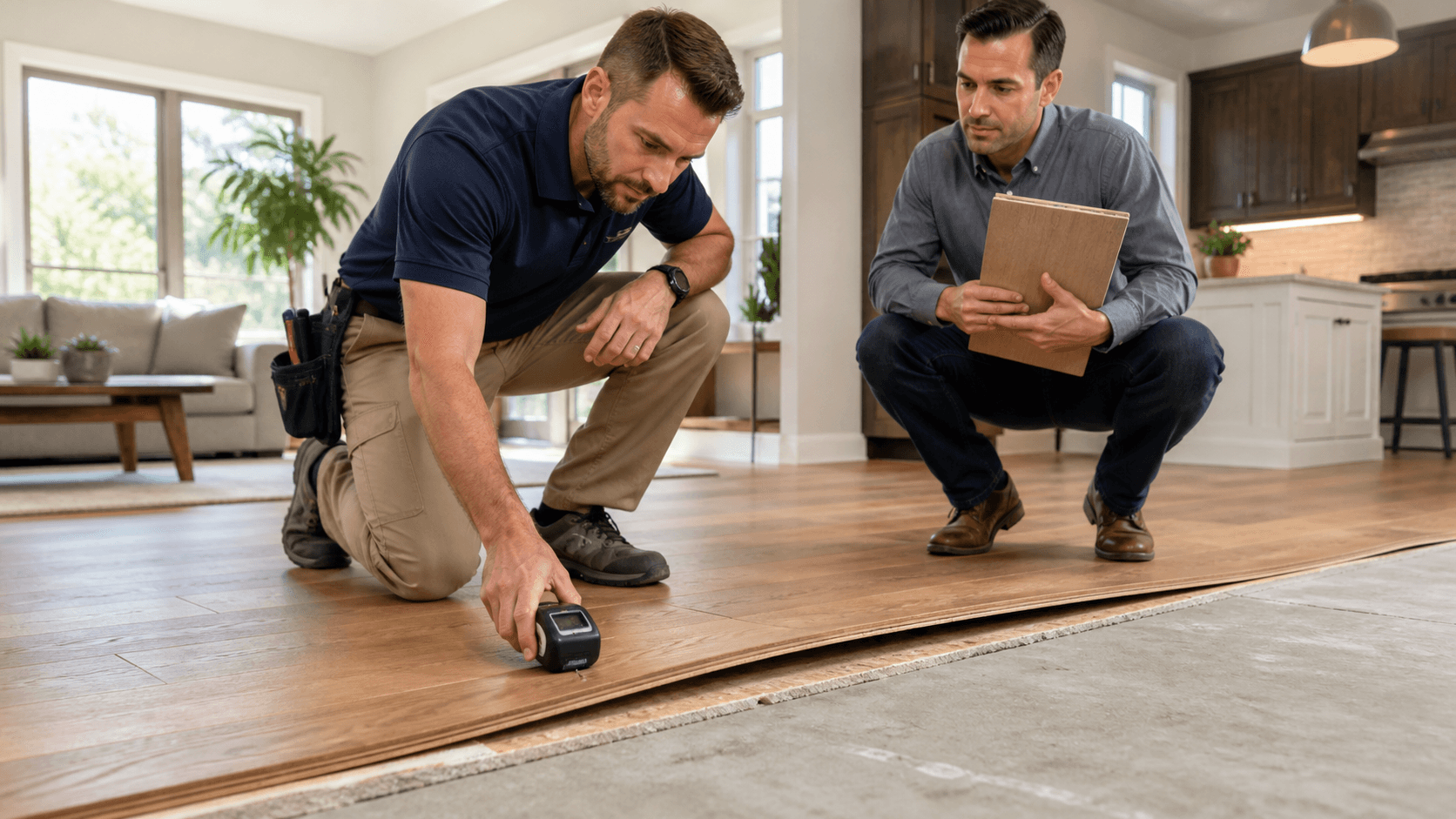
Fall in Southern California does not always feel like fall. Warm afternoons paired with cooler nights can create a perfect storm for hidden moisture in concrete to turn into mold beneath your floors. People often think dry weather means dry slabs, but that is not always true. Once new flooring is installed, any moisture trapped underneath can cause more trouble than you expect.
Moisture testing for concrete floors is one step that helps catch these problems early. It checks whether a slab is ready for installation or if more time is needed. Without it, what looks like a clean, dry surface could cause issues weeks later. Whether you are putting in wood, vinyl, or tile, testing is worth the time it takes.
Concrete Floors and Hidden Moisture in Fall
Concrete does not dry the way you expect. In early fall, cooler nights make the top surface of a concrete slab feel fine, but underneath, it may still be holding water from late summer. Warm days bring moisture back up to the surface, where it can get trapped when flooring is installed too soon.
This is more common when concrete was poured close to the end of summer. Drying slows down, especially in shaded areas or places with little airflow. That moisture has nowhere to go, and if it gets sealed in with new floors, mold growth becomes likely.
Concrete does not show where it is wet just by looking. Moisture may spread across the slab slowly, and without the right tools, it is easy to miss. That is why testing early in the season is one of the smartest ways to avoid mold beneath your floors before it starts.
Early Signs You Might Have Moisture Under Flooring
When moisture starts to make trouble, the warning signs usually show up on the floor itself.
- Wood feels soft or spongy in places
- Vinyl starts to pull at the edges or bubble
- Tiles sound hollow or become loose with light pressure
Other signs are more subtle. The air might smell stale, even after cleaning. You may see dark stains at the corners of rooms, near baseboards, or under rugs where moisture is collecting. These symptoms often appear all of a sudden, weeks after installation, not right away.
People often think it is a product issue, but most of the time, the cause is what is hiding underneath. Once flooring traps in moisture, mold can grow quietly. It does not take much for a clean job to become a costly redo.
How Moisture Testing Works Before You Install
There are a few different tools used for testing. Each one checks the slab in a different way, depending on what you are looking for and how soon you plan to install.
- Surface meters measure moisture at the top layer of the concrete
- Relative humidity (RH) probes go deeper and track levels inside the slab
- Calcium chloride kits test moisture coming out of the slab over time
Testing should happen before the flooring materials arrive. That way, you can allow more drying time or apply moisture barriers if needed. Some tests take just one day, while others might span a few depending on the method.
Doing this upfront can save weeks of delay later. The idea is not to make the job needlessly complex, it is to make sure the materials go on top of a surface that is truly ready. When you skip testing, there is a risk you will not find out about the problem until after everything has been installed.
- At OC Flooring Inspection, we use calibrated surface meters, in-slab probes, and calcium chloride tests for accurate measurements and written reports.
- Our testing is used by homeowners, property managers, and contractors, and is trusted for both warranty records and project planning.
What Happens When You Skip Moisture Testing
Many flooring issues start because the slab was not tested first. Without knowing the true moisture level, adhesive may never fully bond to the slab. Tension builds underneath and causes seams to lift, boards to warp, or tiles to shift.
It is not just about ruined flooring. Mold tends to grow in places that stay active with warmth and moisture. Once it takes hold under the surface, it can be expensive and time-consuming to fix. Most times, the entire floor has to be pulled up.
We have seen how quickly this leads to problems among property owners, installers, and suppliers. If there is no moisture data from before the installation, it is hard to sort out what went wrong or who is responsible. Testing protects everyone by making sure the slab was ready at the start.
Local Fall Conditions That Increase the Risk
Fall in Orange County can be unpredictable. Some days feel like summer, and others bring cool winds that slow indoor drying without anyone noticing. That mismatch can affect how moisture behaves underneath concrete.
Two things tend to raise the risk here:
- Homes with poor airflow, especially when windows are left open during humid afternoons
- Properties with nearby irrigation or landscaping that keeps the ground wet near the foundation
Even in areas that seem dry, the slab may still be holding humidity. This is why fall can catch people off guard. Everything feels fine until the new floors react, and by then, mold has already begun growing unseen.
Stopping Mold Before It Starts
Moisture testing for concrete floors gives us the insight we need before materials get installed. It tells us whether the concrete is truly ready to be covered or if more time is needed. Fall might seem like a good time to move forward, but it still holds risks that are easy to miss.
Small problems turn into big ones when moisture goes unchecked. Testing helps avoid these situations completely. By starting with the right information, we keep mold from gaining a foothold and protect the work that goes into the space. That kind of prevention makes a lasting difference.
Planning new floors in Orange County means knowing what is happening beneath the surface. Many concrete slabs here can hold moisture long after pouring, especially as we move from summer into fall. Taking time for proper moisture testing for concrete floors helps prevent expensive issues like loose tiles or warped planks later. At OC Flooring Inspection, we make sure you are set up for success. Call us today to schedule before your next floor project gets underway.