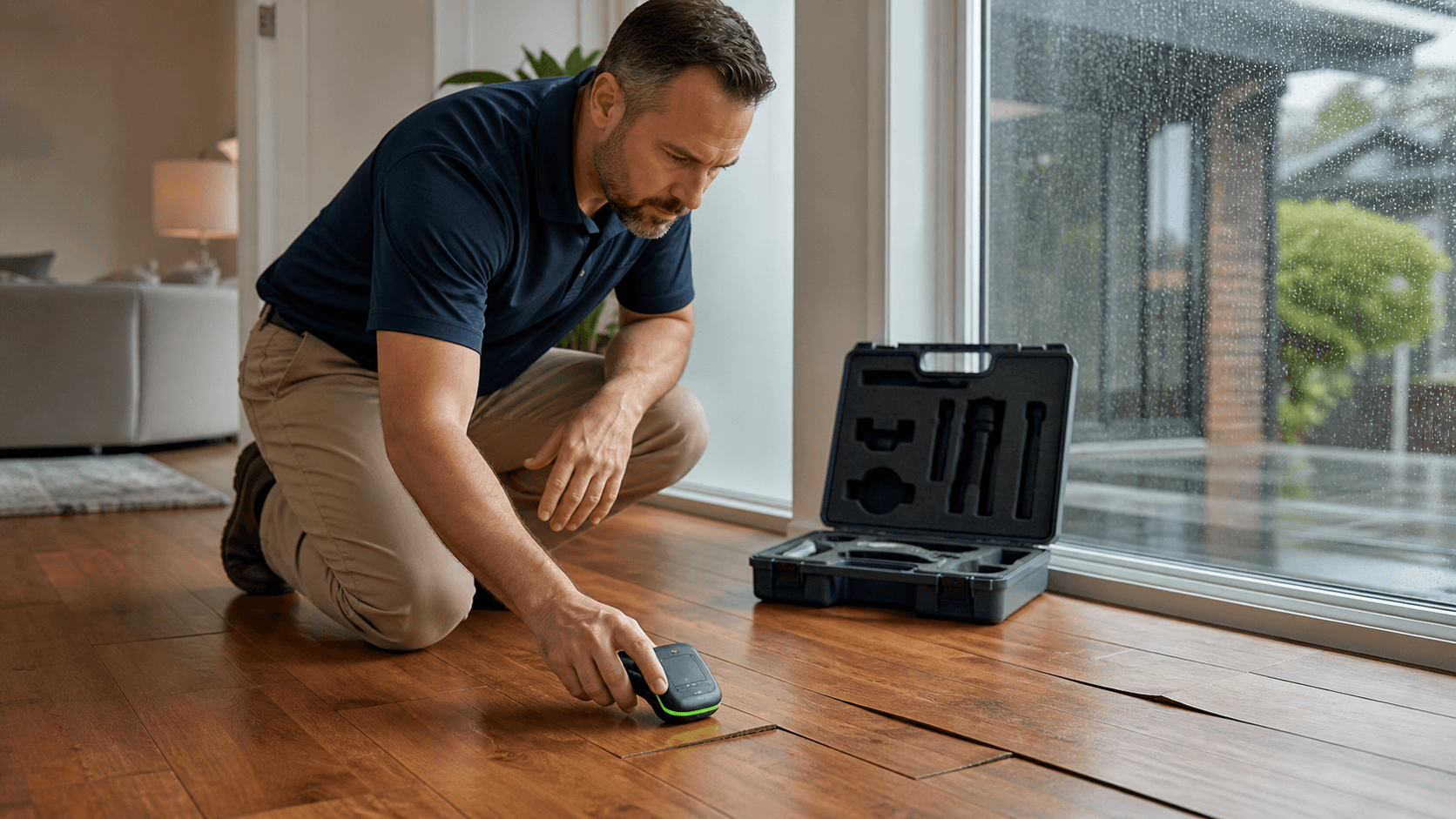
When the cool air starts rolling through Orange County and wet weather picks up, flooring can start to shift in ways many people do not see coming. Whether you have wood, vinyl, or tile on the surface, what matters just as much is what is going on underneath. Subfloor moisture testing helps spot hidden dampness before it causes real damage.
During the winter months, many homes and buildings lock in humidity from outdoor rain and indoor heat. It is easy to miss small issues until they become larger problems. Checking the subfloor before the conditions get worse can save time and money later. Let's walk through why this testing matters, how it works, and when it makes the most sense in Orange County.
How Moisture Builds Up Below the Surface
When outside air starts to cool and homes stay sealed up for warmth, moisture often finds its way in and gets trapped. This becomes more common during the winter months. In Orange County, that might come from rainwater soaking into old concrete or condensation forming indoors from heater use. The moisture does not always stay on top. It settles into the layers underneath the finished flooring.
Different types of subfloor respond to wet conditions in different ways:
- Concrete draws in moisture from below ground and holds onto it for long periods unless there is a proper barrier.
- Wood materials absorb humidity and can expand over time, leading to warped or soft spots underfoot.
- Spaces without good airflow trap water vapor between the subfloor and flooring material.
- We use certified moisture testing tools to provide clear readings for both concrete and wood subfloors, following methods that meet current industry standards.
You might notice signs like a musty smell, soft areas when stepped on, or small gaps between floor planks or tiles. But often, there are no surface clues at all. That is why testing becomes useful before the changes of winter set in fully.
Best Times to Plan for Subfloor Testing in OC
Orange County winters are not severe, but they still bring enough wet weather and indoor heat to raise the chance of trapped moisture. Early November makes a good testing window, since it is right before the dampest stretch of the season begins.
Soil around buildings shifts as temperatures drop, and that can change how moisture sits under slabs. Pair that with limited ventilation from closed windows and you get the kind of minor buildup that causes long-term damage.
If testing waits until after problems show up, it is usually too late to act without major repairs. Getting ahead in fall means you can identify problem zones early, when adjustments are easier and less expensive to make. Even if no change is needed, the peace of mind that comes with clear test results can be worth it during the months when flooring tends to shift the most.
What Happens During a Moisture Test
A subfloor moisture test sounds technical, but it is a simple process when done by someone who knows what to look for. We start by using tools made to measure moisture deep below the surface. These include calibrated meters or probes that read conditions at different depths.
Here is what we focus on:
- Exact moisture levels inside concrete or wood subfloors
- Spots where moisture readings are higher than they should be
- Any signs that a past installation did not follow moisture-related steps
- We provide detailed reports to document all moisture findings, which can be used for warranty, repair, or real estate purposes if needed.
From there, findings get reviewed so you know where things stand. If moisture is creeping up from below or being pulled in from walls or windows, the test helps pinpoint it. That lets you decide if action is needed now or if it is okay to keep things as is for the season. The job is to get clear facts before surface signs appear.
Risks of Skipping a Moisture Check
Sometimes subfloor problems go unnoticed until something breaks. The adhesives used to hold flooring in place can weaken. Boards might start to lift at the corners or shift when walked on. Mold that nobody sees can grow beneath the floor for weeks before someone notices an odor.
Skipping testing does not mean the risk is not there. It just means it may be harder to catch before things get worse. Here is what we have seen happen when moisture stays hidden under floors:
- Warped boards that buckle or pop up
- Mold or bacterial growth in the air space under flooring
- Warranty issues because proper checks were not done before new materials were installed
By the time signs appear on the surface, moisture has usually been active for a long time. Checking early in the season gives you a better shot at catching smaller concerns before they grow.
Making Smart Choices Before Winter Settles In
A small step now can save lots of effort later. Testing for moisture before winter hits its peak is a good way to keep damage from sneaking up on you. And it lets you focus on holiday schedules, visitors, or property use without having to think about what is going on under your floors.
Subfloor layers are often overlooked, but they do a lot of heavy lifting. Just because flooring looks fine does not mean the structure below is in good shape. With less sunlight and more moisture in the air, winter creates the perfect storm for hidden damage to grow.
So, we test before the season really takes off. It is easier to schedule, easier to finish repairs if needed, and much less likely to interrupt your fall or winter plans.
A Solid Start to the Season
When we check moisture early, we give flooring a better chance to last through the cooler months without problems. Whether it is hardwood or tile, every material benefits from dry, stable conditions below the surface. If that base layer gets ignored, problems show up when it is hardest to fix them.
Subfloor moisture testing protects homes and buildings across Orange County through smart timing and trusted tools. It is an easy way to stay one step ahead of the season. With the biggest weather changes still to come, now is the time to check what is going on below. That small glance under the surface helps make sure everything above it stays in place.
Preparing for the colder months in Orange County means making sure your floors are protected from hidden issues that might not be visible yet. Small problems can develop beneath the surface, so we recommend scheduling a proactive check. Our team at OC Flooring Inspection uses advanced tools during our subfloor moisture testing to help you determine if any action is needed. Take steps to protect your investment, contact us today before the season changes.