As spring starts to warm up in Orange County, many homeowners begin preparing their homes for the summer months. One often overlooked trouble spot is under the floor. Hidden moisture beneath concrete slabs can quickly turn into a major headache once the heat kicks in. That's why concrete moisture testing in Orange County should be on your pre-summer checklist.
Humidity from the rainy season combined with rising temperatures can spark a chain reaction beneath your floors. If you have ever wondered why new floors suddenly swell, warp, or buckle in summer, moisture might be the reason. Taking time to test for it now can help stop these problems before they begin. The process of identifying moisture beneath your flooring does not require major disruptions, but it does make a major difference when it comes to preserving the longevity and safety of your floors.
Why Moisture Builds Up Under Concrete Floors
Concrete looks solid, but it acts like a sponge. In cooler months, Southern California's mild but damp weather allows water to sneak into the slab and settle there. Even if you do not have flooding or spills, moisture can still seep in from the ground underneath.
- Concrete slabs absorb moisture slowly, then hold onto it much longer than wood or tile
- Once the weather warms, that trapped water starts pushing upward
- If your flooring is not built to handle it, trouble starts to show at the surface
This is not just about looks. Lingering moisture can lead to early floor damage, mold growth, and loose finishes. Homes that do not test for it are left guessing, often too late. Since the appearance of your floors does not always indicate what is happening underneath, small problems can often go unnoticed until real damage becomes visible. Some homeowners even notice changes within just a year of installation.
How Summer Heat Can Make Moisture Problems Worse
Once the warm air settles in, things start moving faster under your floors. Heat does not just make you sweat. It speeds up the evaporation process happening inside the slab. That creates pressure, which pushes hidden water through adhesives, boards, and seams. Moisture that was previously held in the cool slab is now forced toward the surface as the temperature rises.
- Wood floors can swell and warp when moisture levels shift
- Laminate often buckles or lifts at the edges
- Glue holding planks or tiles in place can soften or fail completely
Here is the thing, by the time you see these problems, the damage has already started. Repairs can get expensive quickly. That is why May is the right time to test. Late spring conditions give you a window to catch warning signs and act before damage spreads during summer. Addressing issues early helps reduce costly repairs and eliminates the surprise of last-minute emergencies.
Signs Your Home Might Need Moisture Testing
Spotting trapped moisture early is not always simple. Not all signs are obvious. Some changes happen slowly and often go unnoticed until floors start reacting. Here are some clues that something could be happening beneath the surface:
- Musty or earthy smells with no clear source
- Tiles or boards shifting slightly or cracking unexpectedly
- Gaps forming between boards or edges rising around the walls
- Soft spots underfoot in wood or laminate flooring
If you have seen any of these or had flooring installed within the past year, it is smart to schedule a check. Waiting for something to go wrong only makes cleanup harder. Moisture does not show up on cue, it moves on its own timeline. Recognizing these subtle warning signs allows you to address the problem early, helping protect your home from unnecessary damage.
Each flooring material reacts differently to moisture, so even a small increase can cause unique symptoms. For example, wood and engineered planks are especially susceptible to cupping or lifting, while vinyl and laminate may develop soft sags in high-traffic spots.
What to Expect From a Professional Moisture Test
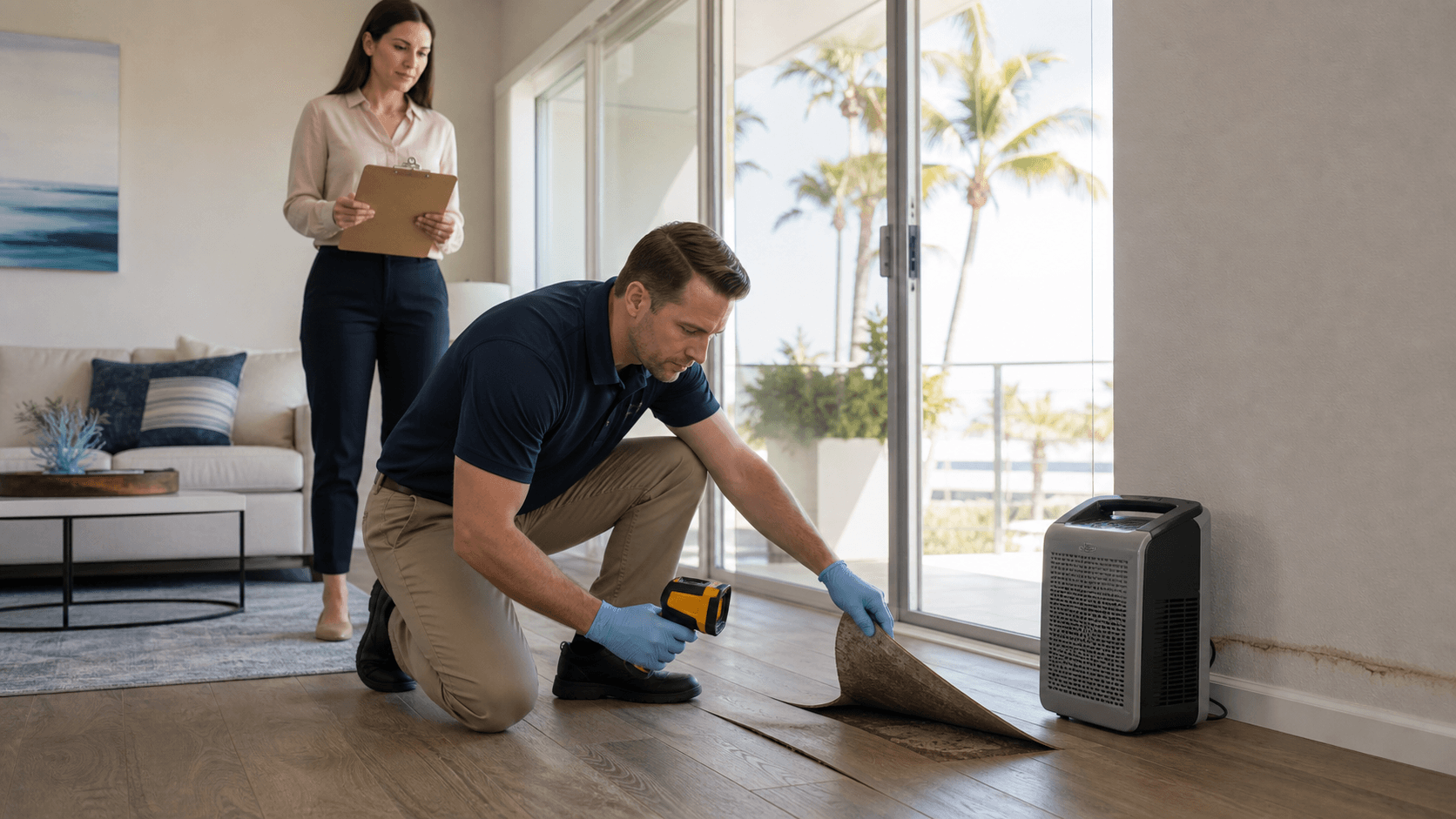
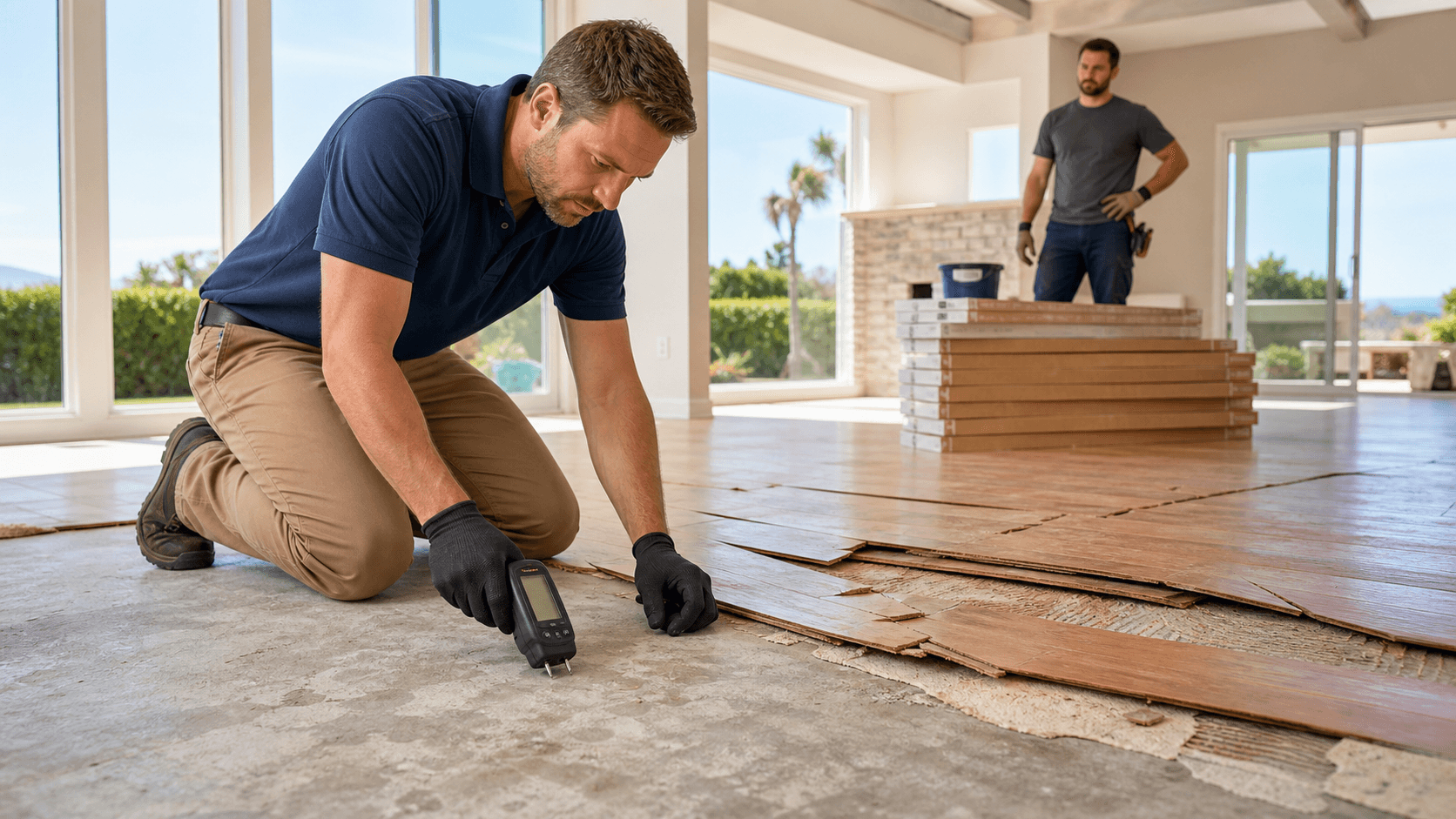
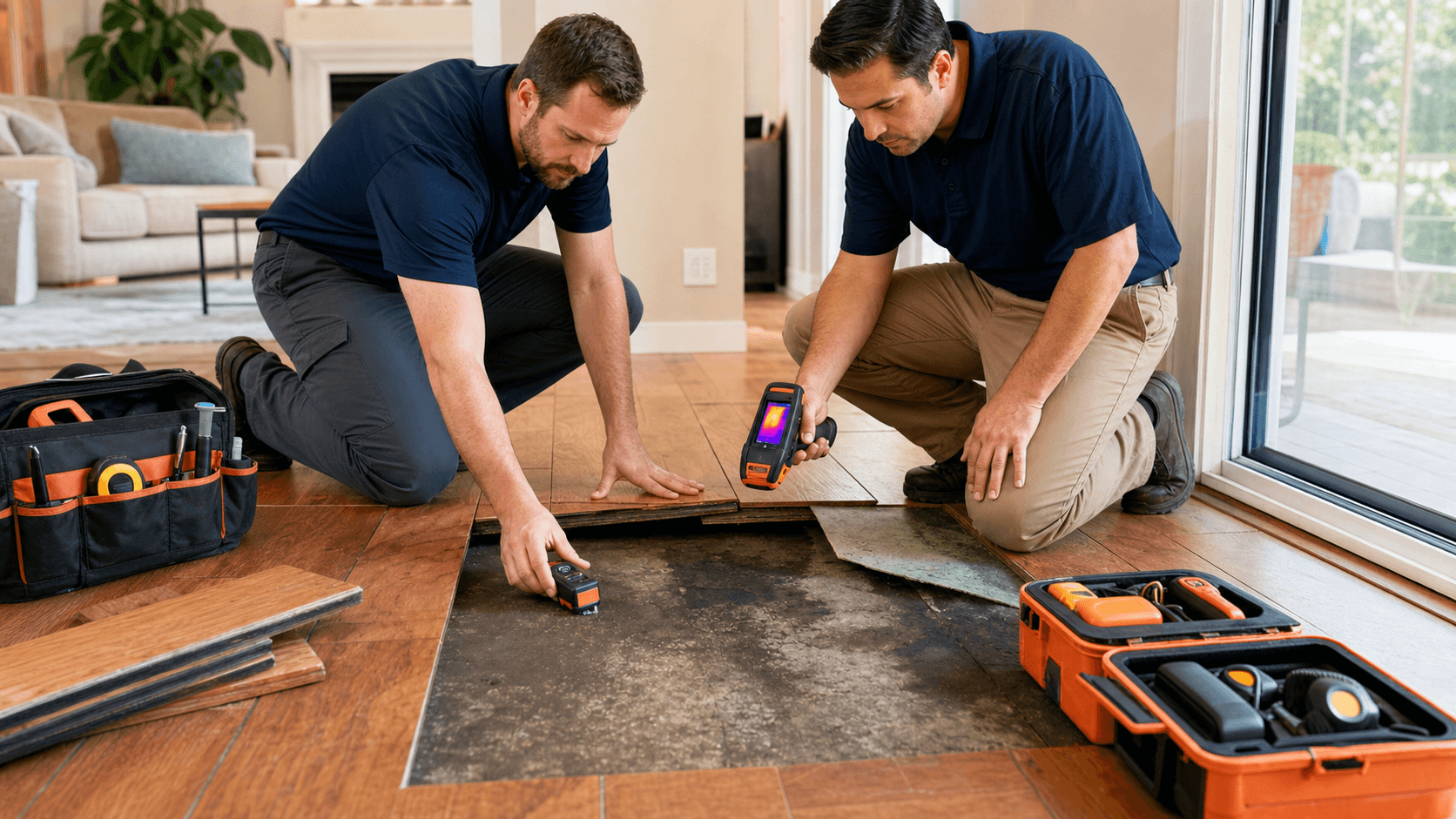
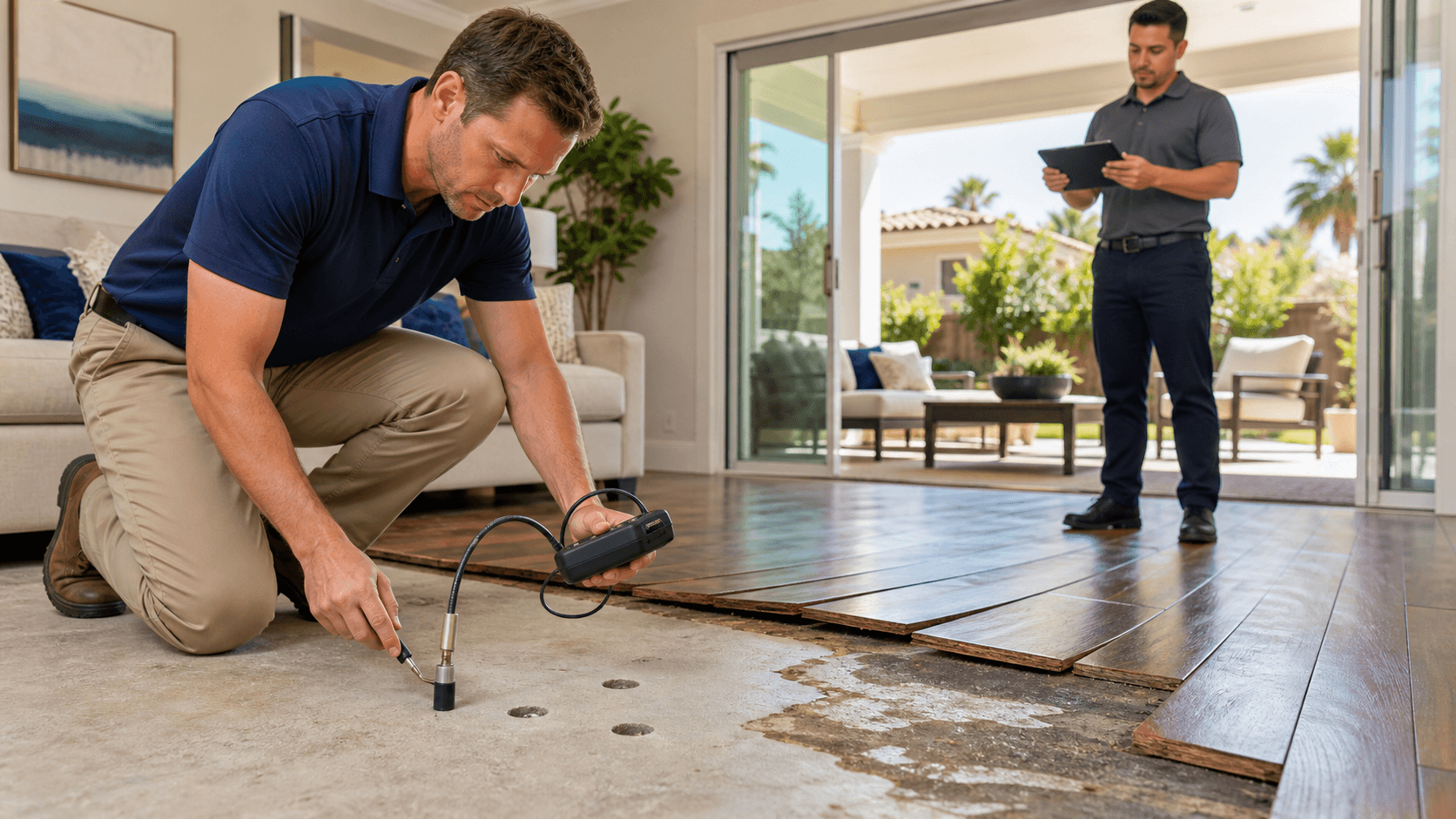
When it comes to moisture, readings matter. Certified inspectors use tools that measure how much water is inside the concrete and flooring layers, all without tearing anything up. It is a detailed process that gives a clear picture of what is happening below. Moisture meters and probes can provide a snapshot of both surface and deep conditions, helping explain the cause of surface distress.
- Testing includes checking surface and deep-slab readings across multiple spots
- Results can show if moisture is rising, staying trapped, or evaporating
- Readings are compared to safe limits based on your flooring material
We are a California-licensed contractor and certified independent inspector. Our team provides unbiased reports and photos for both homeowners and industry professionals, helping clarify the root cause of flooring problems. Reports include moisture maps, recommendations for repairs, and impartial documentation that can help support warranty claims or guide contractors during the repair process.
The good part is once you have results, you can make informed choices. Whether it means making small changes or stopping problems before they grow, testing gives you control instead of surprise repairs later. Being informed gives you peace of mind and concrete evidence, ensuring you only address the repairs needed, rather than guessing or replacing entire sections unnecessarily.
The Right Time to Check for Moisture Is Before It's Hot
Late spring in Orange County is the calm before the heat. It is dry enough for testing, but not yet hot enough for moisture issues to get out of hand. That is the window when inspection is easiest and action is most effective.
We have worked with many homeowners who saw early signs and caught the issue fast. But we have also seen those who waited and ended up with major damage by August. It is a lot easier to prevent problems beneath your floors than to fix them later. Moisture does not go away just because the surface looks clean. Once it is under there, it needs to be addressed properly.
If your home was recently built, remodeled, or had flooring installed in the last 12 months, testing might be overdue. Heat speeds things up. Moisture that hides in May will make itself known by July. Do not let summer bring more than just sunshine. Checking now sets your floors up to stay solid when the temperature climbs. By being proactive, you help protect your investment in your home and reduce the risk of surprise repair bills.
Schedule Concrete Moisture Testing Before Summer
Noticing floor swelling, lifting, or musty smells in your home? Now is the perfect time to address moisture problems before the summer heat makes them worse. At OC Flooring Inspection, we use precise tools to diagnose and solve moisture issues under your floors. Learn more about our concrete moisture testing in Orange County and schedule your inspection today to keep repairs easy and your home protected.