Summer in Orange County brings more than just heat and longer days. For commercial property owners and managers, it can also bring flooring problems that were not noticeable earlier in the year. While warm weather is a welcome change, the increase in temperature, humidity, and foot traffic can stress out floors in ways that are not always seen right away.
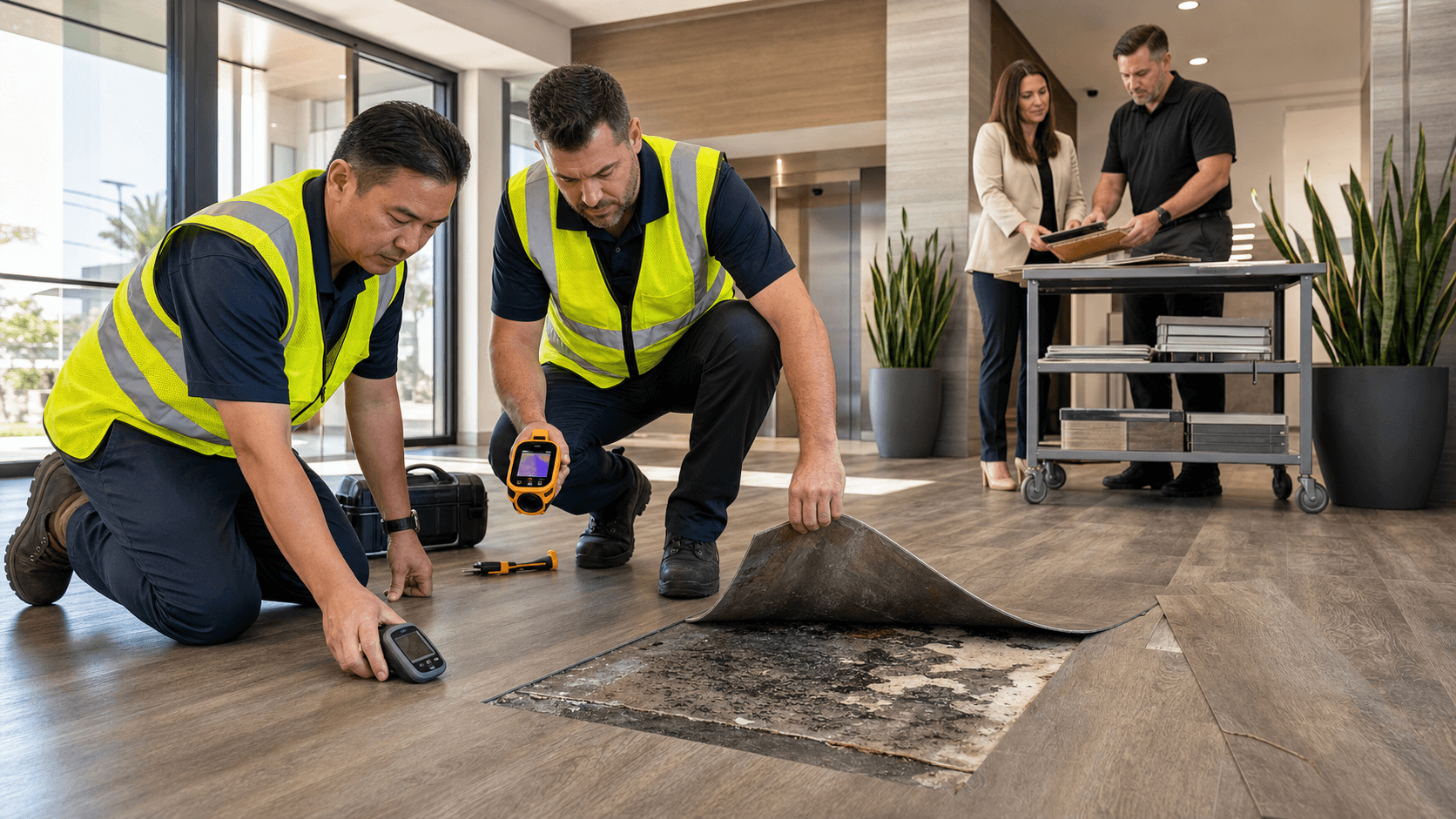
A commercial flooring inspection can be the difference between catching an early issue and facing major repairs later. Summer conditions often create the perfect storm for hidden wear and tear to rise to the surface. From concrete expansion to moisture under the surface, now is a smart time to be on the lookout.
How High Temperatures Impact Commercial Flooring
When things heat up, flooring materials respond. Different types of flooring expand or contract when exposed to higher temperatures, especially when daily temperatures rise quickly. This movement does not always show up in obvious ways at first, but over time it can lead to lifting, separation between seams, or buckling.
Some older commercial buildings struggle with interior temperature control. HVAC systems that are no longer efficient may allow spaces to heat up more than expected. When indoor temperatures climb too high, adhesives that hold certain floors in place can start to soften or break down. This can affect everything from glue-down vinyl to laminate floors, especially in areas with strong afternoon sun exposure.
Building owners may not realize anything is wrong until the floor begins to shift, or tiles lose their grip. Once changes like that start, they tend to spread quickly. That is why temperature changes alone make summer a risky time to ignore flooring behavior.
Hidden Moisture Problems That Appear in Summer
Not all flooring damage starts from above. Moisture hiding underneath can quietly cause weeks of trouble before anyone notices. In summer, air conditioning runs more often to cool large commercial spaces. As it does, condensation forms in vents, around piping, or between walls and floors. That moisture can easily settle into the subfloor.
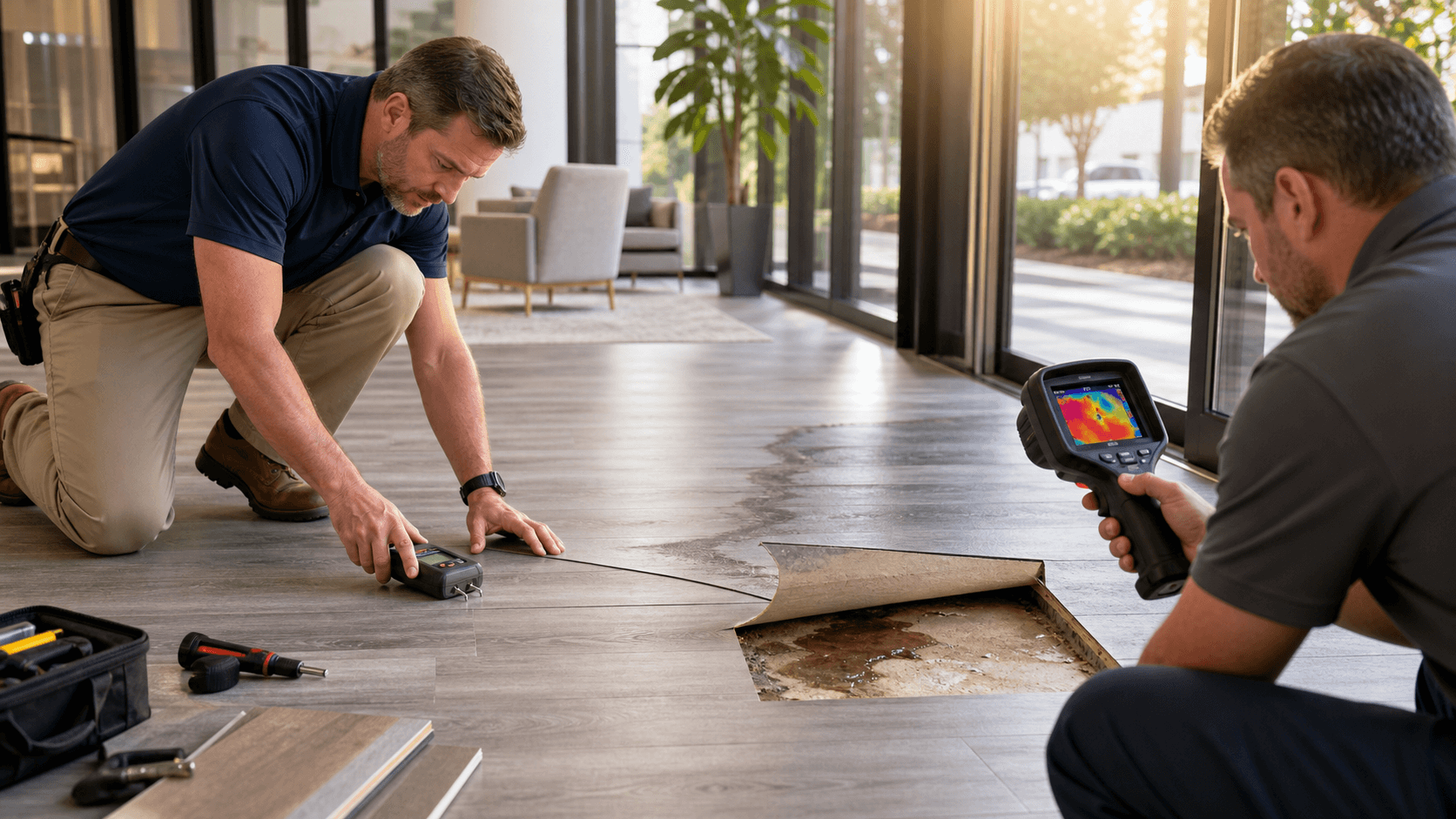
Another problem is movement from the concrete slab. As temperatures rise, trapped moisture in the slab may start working its way up. This kind of moisture migration creates ideal conditions for surface bubbling or dark patches that look like dirt but do not scrub off. You might even notice a musty smell before visible signs appear.
Since summer heat speeds up this process, early months like June are important to watch closely. Moisture-related damage might grow unnoticed through July and August, especially in spaces without good airflow or humidity control.
Increased Traffic and Wear During Summer Months
Many commercial spaces in Orange County get busier as summer begins. School is out, more people travel through public buildings, and retailers tend to see more foot traffic. That extra movement takes a toll on floors, especially in entryways, hallways, and customer-facing areas.
Flexible materials like vinyl planks or thinner laminate can start to dent or lift under added pressure. Even small soft spots in the floor become more obvious with repeated traffic. The signs may include unexpected creaking, shifting underfoot, or uneven wear patterns.
Without a commercial flooring inspection during this time, early signs of failure may go unaddressed. What once was a minor pressure point can turn into a tripping hazard or exposed underlayer. Summer is when traffic rises, and that can quickly reveal flooring weaknesses that were sitting idle before.
UV Exposure and Surface Damage Near Entrances and Windows
Sunlight can be good for lighting a space, but it is rough on commercial flooring when left unchecked. Direct rays shining through storefront windows or into open workspaces may cause flooring near the glass to dry out faster than other areas. As this happens, edges can start to curl, or corners will lose flexibility.
Discoloration is another common issue. Floors with darker tones often begin to fade over the summer months, especially when they are not protected with shade, tinting, or UV-blocking films. These color changes usually start showing up around June but will deepen in color loss by early fall.
Entry areas see the worst of both worlds. They catch frequent sunlight and foot traffic. When strong UV meets tired finish or poor matting, boards or tiles start to shift out of place. The damage may not be enough to notice in passing but raises problems over time when ignored.
When Subfloor Problems Become Easy to Miss
Summer is not just tough on floor surfaces. The materials underneath the visible layer also take on new stress when weather conditions shift. Moisture, heat, and small amounts of movement from heavy equipment or foot traffic can cause dips or creaks underneath.
In warm months, those signs are often harder to catch. Lights are brighter, ventilation is stronger, and heavier walking patterns might mask early warning signs. If the subfloor starts to sag in sections, flooring materials above can lose support and buckle without warning.
We know that catching subfloor damage early makes a big difference. A commercial flooring inspection during this time can pick up on these patterns before the floor starts to look or feel unsafe.
Expert Help for Summer Flooring Concerns
We are a California-licensed contractor based in Irvine, serving the entire Orange County area with independent, certified flooring inspections. Our team provides detailed reports to support property managers, contractors, and attorneys involved in flooring disputes. Our services focus on accurate inspections that identify the true source of commercial flooring failures, including moisture intrusion and installation problems, so issues can be quickly resolved before they escalate.
Most commercial property owners do not think about flooring problems until they are staring at lifted corners, warped tiles, or bubbling glue. But summer conditions do not wait for the damage to be obvious. Heat, moisture, sun, and usage each pile on stress in their own way. With our professional inspections and documented reports, our clients can help protect their investment during the most challenging season for flooring.
If you are starting to notice signs of floor stress this summer, like warping near windows, soft spots underfoot, or shifting tiles, do not wait until the damage grows. A professional look now can catch what you might miss by just walking through. Our Orange County clients often benefit from a mid-year check to help stay ahead of potential repairs. To schedule a commercial flooring inspection, contact OC Flooring Inspection today.