Introduction
Water damage can show up fast or hide beneath flooring for weeks. Either way, it has a way of changing more than just the appearance of a surface. Buckling panels, warping, and shifting seams are just some of the signs that flooring has been hit by excess moisture. But once damage appears, it often starts something just as stressful, a dispute about who or what caused the problem.
That's when flooring dispute resolution matters. It gives property owners, builders, and manufacturers a chance to get to the bottom of what happened and move forward with clear answers. With Southern California seeing more summer storm patterns and indoor cooling demands in July, it's a smart time to look closely at how this process works and why it matters.
What Triggers a Flooring Dispute After Water Damage
Not every issue with flooring turns into a conflict, but certain signs get people talking, and not always calmly. These problems usually appear after a leak, spill, or burst goes unnoticed or is not fixed fast enough.
- Planks or tiles that lift in the middle or curl at the edges
- Rippling in vinyl or other flexible flooring
- Hollow-sounding spots or loose panels that weren't there before
People in these situations often have different opinions about the real cause. Some blame poor installation. Others say the materials could not handle conditions they were supposed to withstand. Sometimes the argument centers on when the water intrusion actually started. That is where having a neutral step-by-step process starts to help.
A flooring dispute may emerge when property owners and contractors disagree about liability. Questions might arise about whether the product was suitable for the specific environment, or if the preparation prior to installation was truly sufficient. It is not unusual for a dispute to involve multiple parties, especially when insurance adjusters and manufacturers enter the conversation. The presence of water exacerbates these situations, especially if flooring reacts unpredictably over time.
Such disputes can escalate quickly without a clear record of events. Documentation and communication are key to preventing misunderstandings. When all parties understand that the goal is factual clarity instead of finger-pointing, the groundwork for fair resolution is set.
First Step: Inspection and Documentation
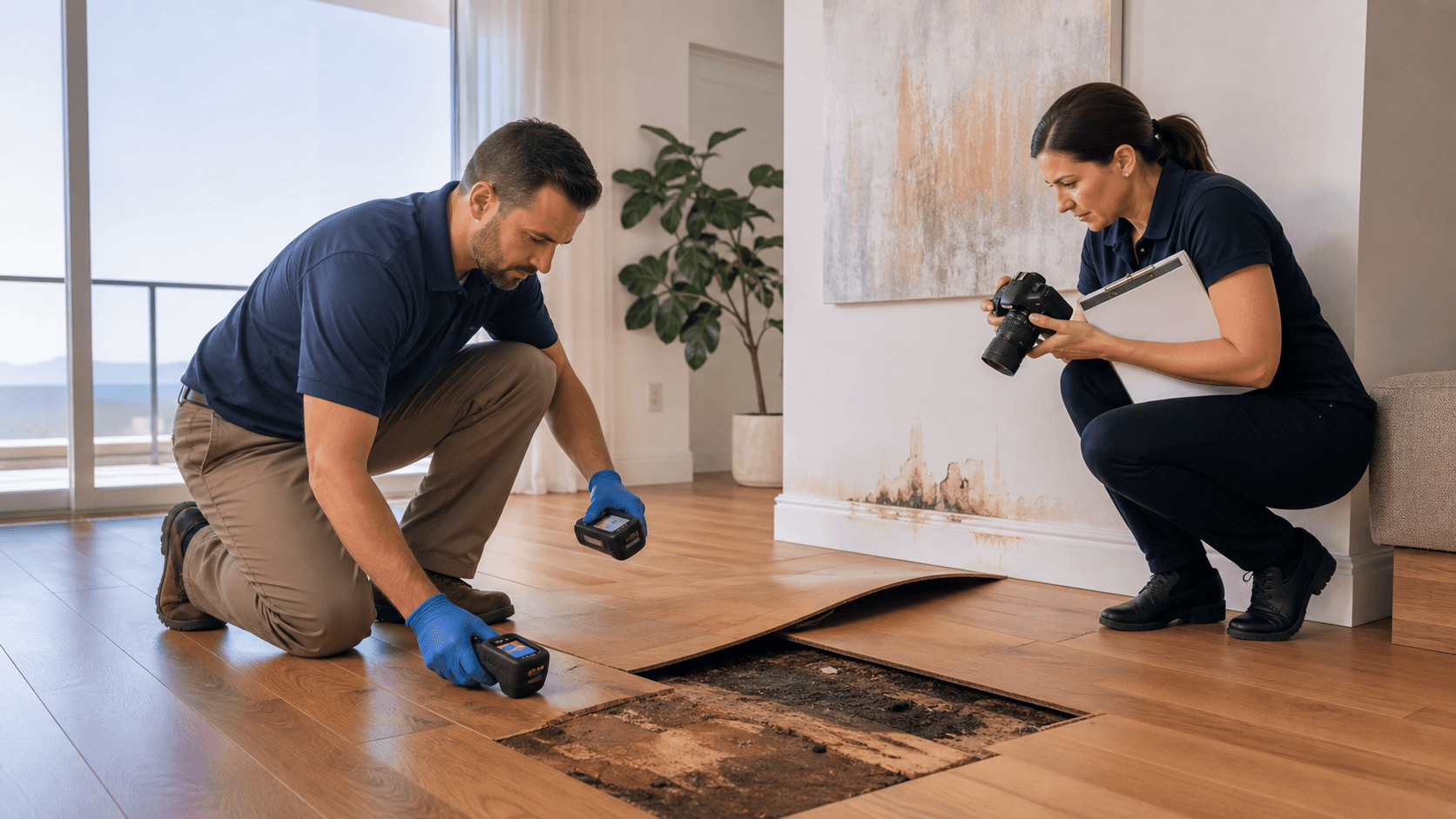
The resolution process begins with inspection. That means a certified contractor steps in with clear instructions: find out where the damage came from, how it spread, and whether installation or product choice played a role.
- We examine all parts of the floor, from surface material to subfloor. We also check baseboards, moldings, and nearby structures for signs of spread.
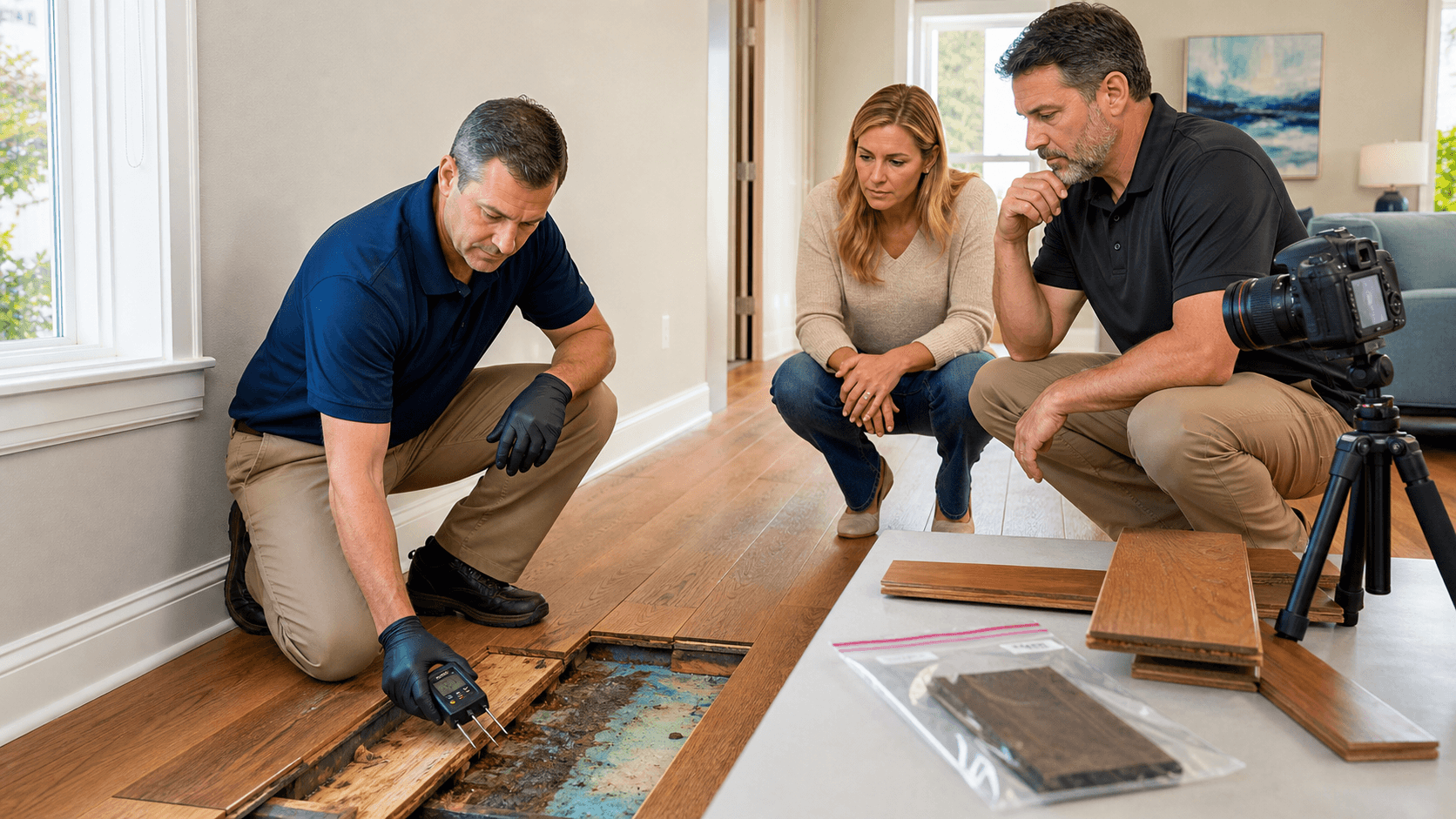
- Moisture readings help tell us how far the water traveled or stayed trapped over time.
- Photos support everything we find, and we make notes on anything that looks off, like gaps, loose adhesives, or failed vapor barriers.
- OC Flooring Inspection provides certified reports and expert witness services that are relied on by attorneys, contractors, and manufacturers to resolve flooring disputes.
The inspection stage is not only about what is visible, but also about identifying hidden threat zones under planks, tiles, or carpet. Patterns of moisture often show up in expected areas, such as around appliances or windows, but sometimes data points to less obvious causes, such as improper underlayment or vapor intrusion.
Once that step is complete, everyone working on the case has a common report to reference. That removes guesswork and builds a record that's harder to dispute later.
Clear, thorough documentation at this stage makes all the difference. The best inspection reports include notes describing conditions before, during, and after the incident, as well as evidence of any minor or major repairs already undertaken. If a subfloor is soft or appears uneven, specialists will note these details to establish connections between present symptoms and the root cause. Reports are often supported by humidity measurements and readings taken at various depths. This adds technical backing to visual observations and supports each party's ability to understand what happened.
How Communication Works During a Flooring Dispute
Next comes the part where everyone involved sees the findings and can respond. Contractors, homeowners, and insurance representatives all look at the inspection results and have a chance to ask questions or share more details.
- The full report goes out at once, with no side given early access or extra copies.
- Each group has space to add context. That might include receipts, product specs, installation photos, or warranty notes.
- When everyone works from the same facts, it helps cool things down. Finger-pointing gets replaced with a focus on facts.
Transparency and equal access are essential at this stage. By making full documentation available to all, misunderstandings are reduced, and opportunities for clarification are created. Sometimes, contractors might recall a unique site challenge, or a homeowner may have photos from before work began. These shared perspectives, when combined with independent findings, can help resolve questions about chain of events or product suitability.
In many cases, just having the details laid out creates enough clarity to avoid bigger legal steps. When people feel heard and can compare their version to verified data, it becomes easier to find a next step everyone can accept.
It is important to remember that not every conversation will be comfortable, especially if emotions are high. Having objective data, verified by a specialist, makes those conversations constructive and helps ensure decisions are based on what actually happened, rather than assumptions or selective memory.
Reaching a Fair Resolution
This stage depends a lot on how seriously each side takes the process. Some situations resolve quickly once the cost of damage is plain and the cause is more obvious than expected. Others take time, especially when money, property value, or reputation is on the line.
- The inspection report builds the foundation for whatever decision needs to come next, whether it's a fix, replacement, payment, or all three.
- In heated disputes, a mediator sometimes gets involved. This helps both sides keep things moving without heading into court too soon.
- If legal action does follow, the full flooring dispute resolution record helps back up claims and protects everyone's version of the story.
- We help organize communication and recordkeeping so no key detail gets lost between parties or stages in the process.
A fair resolution process relies on honest evaluation and respect for independent findings. The more thorough and transparent the inspection and communication have been, the easier it is to agree on a plan. In some cases, small disputes are resolved with added repairs or partial replacement. In others, insurance may play a role, or both parties may negotiate responsibility based on the findings.
When each piece of the sequence works (inspection, communication, records), the results feel more fair and less like one-sided guesses.
If negotiation slows or stalls, involving a neutral party such as a mediator can get things back on track. The mediator's main responsibility is to bridge the gap between groups, using the inspection report and all supporting documents as a basis for fair agreement.
If the dispute escalates to formal proceedings, courts or arbitrators rely heavily on the independent reports and communication records created during these earlier steps. This documentation not only informs decisions but also provides lasting protection for everyone involved against future questions.
When the Dust Settles: Moving Forward After a Dispute
No one wants to be stuck in long property disputes, especially in the middle of a season when flooring work is harder to schedule. July heat in Orange County can slow down repairs and make it harder to open up full areas for drying or replacement. That's why having a resolution early gives everyone more time to plan and recover.
- Once the issue is settled, the right repairs can happen quickly and with more confidence.
- A solid inspection report doesn't just solve this problem, it helps stop the same thing from happening again by showing where the risks were missed the first time.
Having a record of how a dispute was handled is valuable for future decisions. It teaches both property owners and contractors about preventative steps, better communication, and what to watch for during future renovations.
Flooring disputes are frustrating, but they don't have to drag out forever. A clear, fair process helps both sides reset, talk plainly, and move on. That way, energy goes back into fixing the damage itself, not just pointing fingers about who caused it.
At OC Flooring Inspection, we know how stressful unresolved floor damage can be. Water issues under your floor can escalate quickly, causing unnecessary delays and confusion. With facts and clear reporting, our team helps you cut through the back-and-forth and move toward solutions. If you're in Orange County and need support guiding the process, proper flooring dispute resolution can make all the difference. Reach out to us today for a detailed inspection that brings clarity and helps you move forward.